Find which material suits your chemical best!
Third-party content requires consent
To load this content, approve your cookie preferences and allow the required cookies.


ARO is pleased to present this selection guide to provide a convenient and informative reference tool for diaphragm pump and piston pump selection. This guide was compiled from information provided by material suppliers and manufacturers.
X or Brackets around a rating letter indicate that no data is available, but the ratings are made on the basis of exposure test in similar chemical groups.
To load this content, approve your cookie preferences and allow the required cookies.
The chemical compatibility listings are intended as a guide only.We assume no liability for the accuracy of their use. The usershould test under their own operating conditions to determine thesuitability of any compound and material in a particular application.
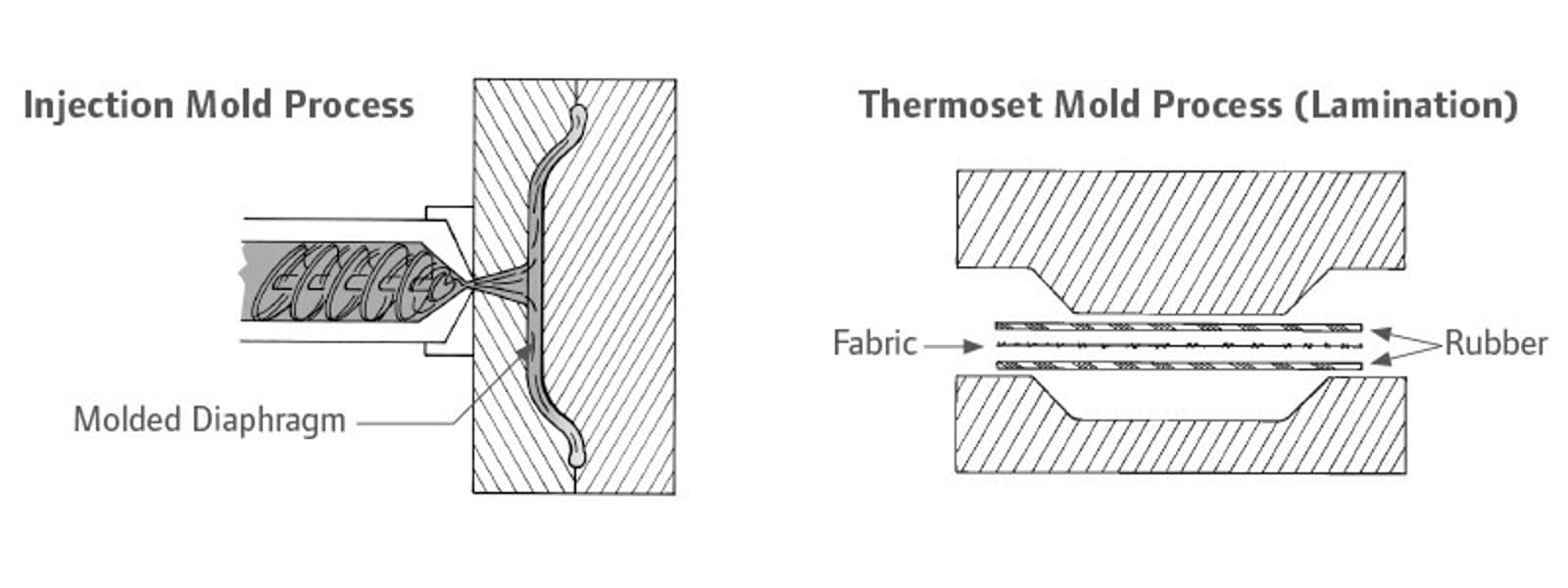
ARO is moving toward replacement of traditional thermoset rubberdiaphragms with thermoplastic elastomers (TPE). Examples of TPEsinclude Santoprene®, Nitrile (TPE) and Hytrel®.TPEs are manufactured using a plastic injection molding process wherethe resin, or diaphragm material, is melted and injected into a moldto produce the diaphragm. The advantages of this process include:
Features | Benefits |
|---|---|
Diaphragm is molded to optimum shape | Excellent flex life |
Homogenous part | No delamination failures |
High performance resins | Chemical |
Laboratory testing has shown:
Santoprene® outperformed all rubber diaphragms exceptBuna in the mild abrasive fluids. The Geolast diaphragm had equivalentlife to the Buna diaphragms and was superior to the other rubberscompounds. PTFE with the Santoprene® backer exhibited thebest flex life of all diaphragms during the test series.
Thermosets diaphragms are constructed by sandwiching (laminating) a layer of fabric reinforcement between two sheets of unvulcanized rubber. These are placed in a mold and compressed under heat and pressure to bond and vulcanize the rubber.
Limitations of the process include: | Results |
Inclusion of fabric limits design flexibility to achieve optimum diaphragm shape | Lower flex life |
Incomplete bonding can occur | Delamination |
Time/Labor intensive | Expensive |
Inconsistent quality | Inconsistent life |
“Wicking” of fabric | Delamination / Leakage |
Thermoplastic elastomeric (TPE) diaphragms are manufactured using an injection molding process. The process allows the part to be molded in the shape and configuration required of the diaphragm to provide excellent performance and life. The TPE resins used to manufacture the diaphragms exhibit excellent dimensional and tensile characteristics eliminating the fabric reinforcement. The following TPEs are used in ARO diaphragm pumps.
Rating A = Excellent B = Good C = Fair D = Poor | Compound | Color Code | Temperature Limits** | Flex Life | Abrasion Resistance Balls (Seats) | Acid Service | Caustic Service | Solvents (Ketones/Acetates | Hydrocarbons Aromatic/Chlorinated | Petroleum/Oils |
|---|---|---|---|---|---|---|---|---|---|---|
TPE | Santoprene (Backer) | Tan (Green) | -40˚ to 225˚F / -40˚ to 107˚C | A | A | A | A | B | D | D |
| Hytrel* | Cream | -20˚ to 180˚F / -29˚ to 82˚C | A | A | C | B | B | C | A |
| Urethane* | Clear | -10˚ to 150˚F / -23˚ to 52˚C | A | A | D | D | D | D | A |
PTFE |
| White | 40˚ to 225˚F / 4˚ to 107˚C | A | C | A | A | A | A | A |
Rubber | Neoprene | Green | 0˚ to 200˚F / -18˚ to 93˚C | B | B | C | C | D | D | B |
| Nitrile (TS) (BUNA-N) | Red | 10˚ to 180˚F / -12˚ to 82˚C | B | B | B | C | C | C | A |
| Viton | Yellow | -40˚ to 350˚F / -40˚ to 177˚C | C | B | A | A | B | A | A |
| EPR/EPDM | Blue | -60˚ to 280˚F / -51˚ to 138˚C | B | B | B | A | B | D | D |
These materials are manufactured from natural rubber and man madeadditives to enhance resistance to various fluids. Diaphragms aremanufactured using a compression molding process. A nylon fabric meshis molded in the diaphragm to add strength to the compound.
PTFE is the most chemically inert man-made compound known. Newdiaphragm design and material processing have significantly improvedflex life, which is now equivalent to or exceeding rubber compounds. Abacker diaphragm is used to provide additional support.
* Not Available in all models
**Maximum temperaturelimits are based on mechanical stress only. Certain chemicals cansignificantly reduce the maximum safe operating temperature.
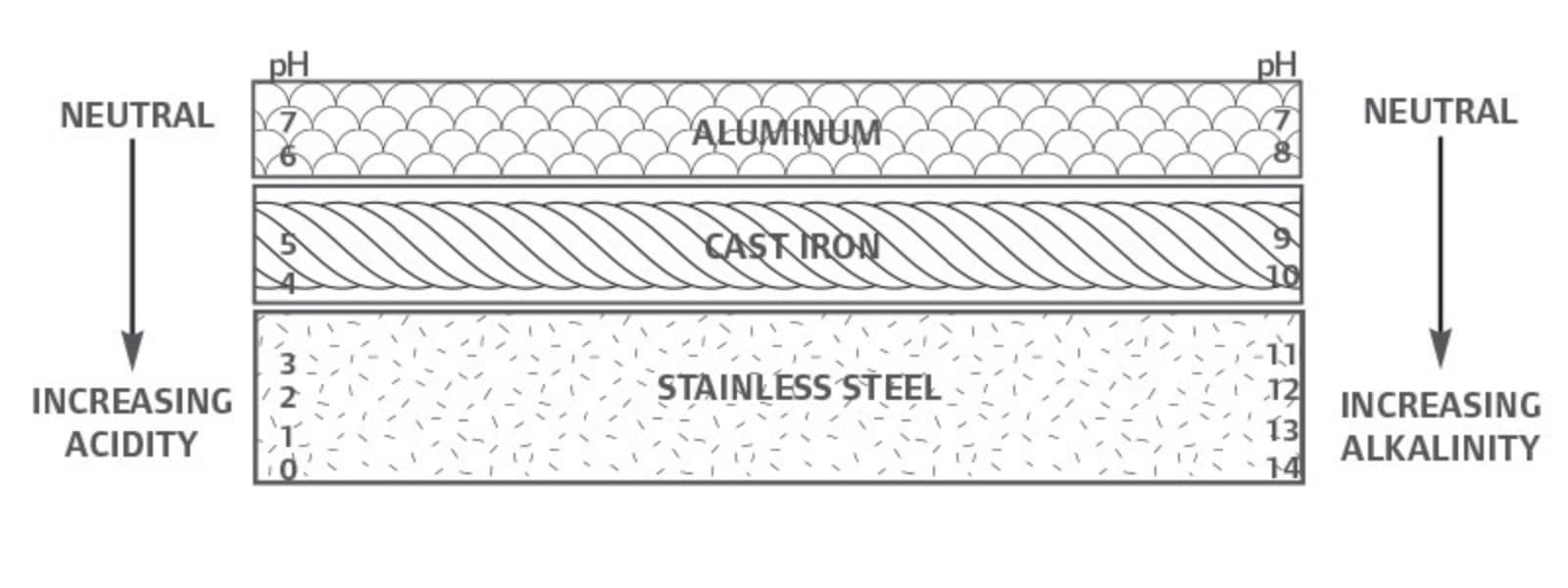
Pump models containing aluminum wetted parts cannot be used with111.-Trichloroethylene, Methylene Chloride, or other halogenated hydrocarbon solvents that react and explode. Although manufacturers of thosethere is solvents typically add inhibitors to prevent a reaction, there is no assurance that they will prevent a reaction under all conditions. Special caution should be exercised when handling reclaimed or used solvents since the inhibitors are often degraded. Only Stainless Steel, Acetal, or PVDF pumps should be used for these materials. Other examples of Halogenated Hydrocarbon Solvents (H.H.C.)include, but are not limited to, the following: Trichloroethane, Methyl Chloride, Carbon Tetrachloride, and Chloroform Dichlorethylene.
Polypropylene – A general purpose low cost material havingbroad chemical resistance for use in a wide variety of chemical applications.
Kynar (PVDF) – A high performance fluorpolymer resin with excellenthigh-performance fluoropolymer chemical resistance properties. Used for pumping aggressive chemicals at elevated temperature. Material also has excellent mechanical properties.
Groundable Acetal – An excellent material for use in solvent transfer applications. The material incorporates metallic fibers in the resin to render the material conductive to eliminate static charge build up and potential static discharge.
Rating
A = Excellent | B = Good | C = Fair | D = Poor
Non-Metallic Wet End Materials | Temperatue Limits** | Acid Service | Caustic Service | Solvents (Ketones/Acetates) | Hydrocarbons Aromatic/Chlorinated |
|---|---|---|---|---|---|
Polypropylene | +32˚ to 175˚F | A | A |
| NR |
PVDF | +10˚ to 200˚F | A | A | * | * |
Groundable Acetal | -20˚ to 180˚F | D | D | A | A |
*Check chemical compatibility guide for part specific solvent or hydrocarbon.
**Maximum temperature is based on mechanical stress only. Certain chemicals can significantly reduce maximum safe operating temperature.