
Products
Filter Regulator Lubricators
Industries
aro-logo-desktop.png

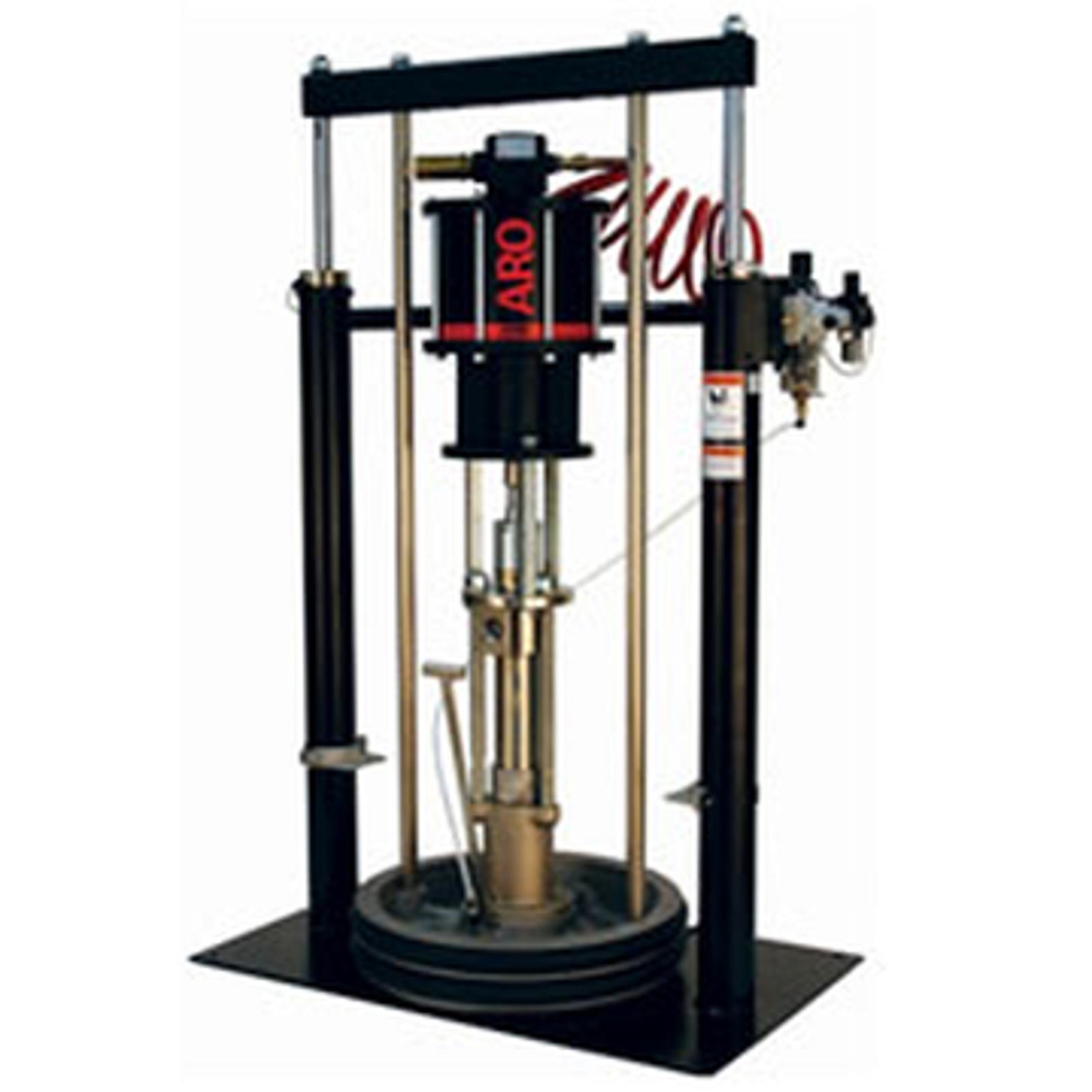
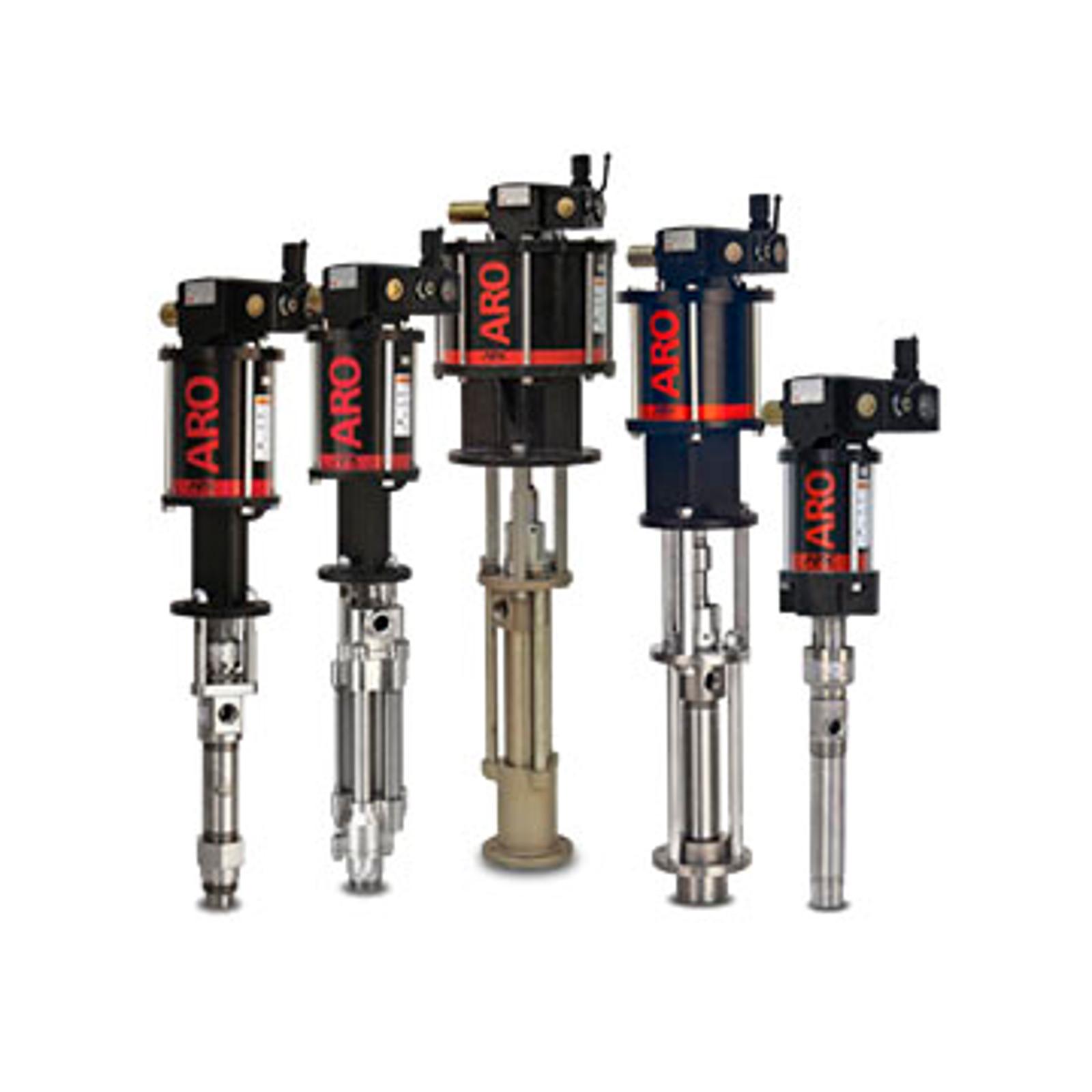
Air-operated piston pumps are one of the most versatile tools in industrial fluid handling. Whether you're transferring paint, dispensing adhesives, or extruding thick grease, a piston pump can handle the job reliably. This guide covers how they work, which type fits your application, and what to look for when selecting materials and pressure ratios. 

How Does a Piston Pump Work?

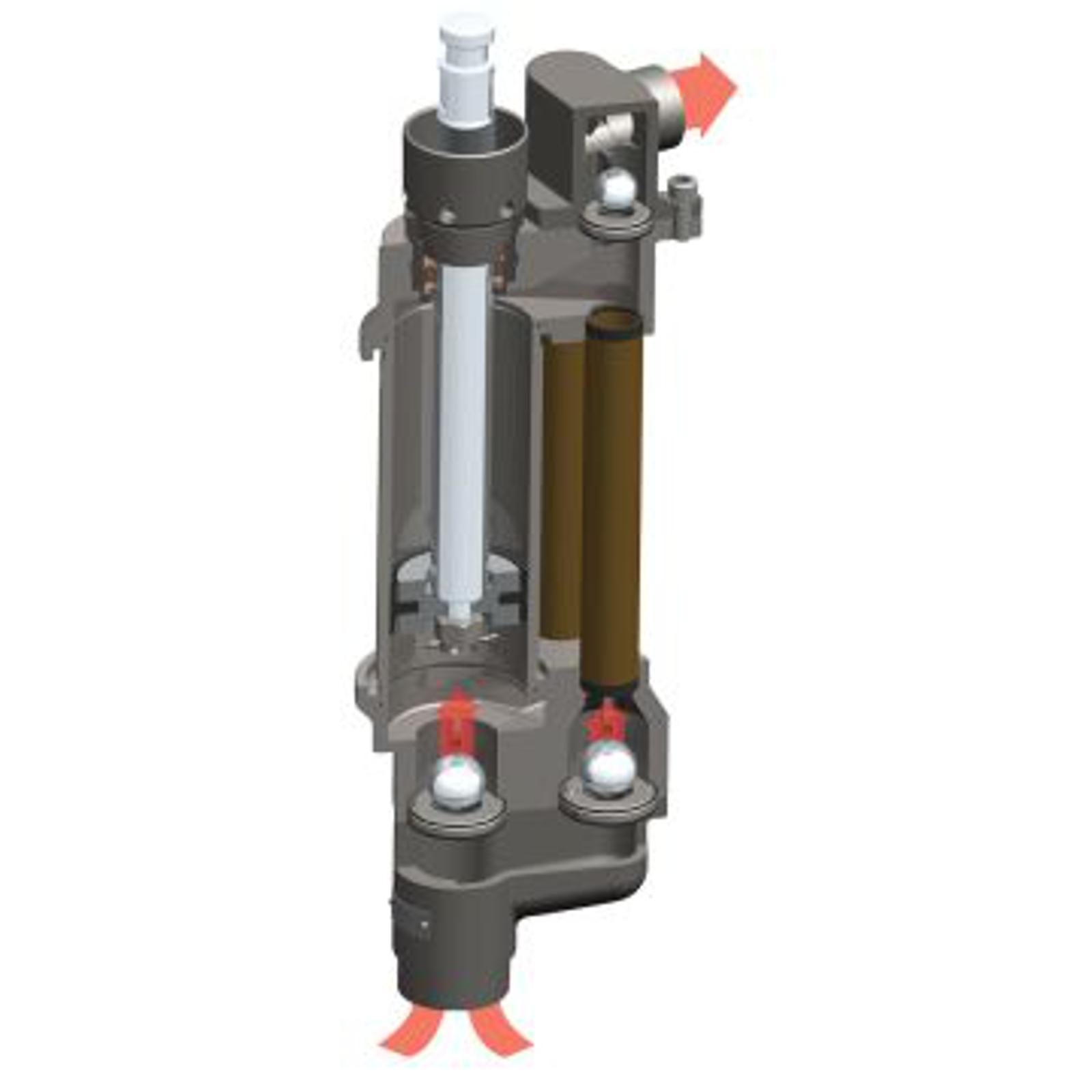
Air-operated piston pump technology uses compressed air to drive a piston back and forth inside a cylinder. As air enters one side, it moves the piston in one direction — drawing fluid in through an inlet check valve. When the air reverses, the piston pushes that fluid out through an outlet valve. This "double-effect" design delivers fluid on both the downstroke and the upstroke, giving you continuous, near-pulse-free flow with no electrical connection required

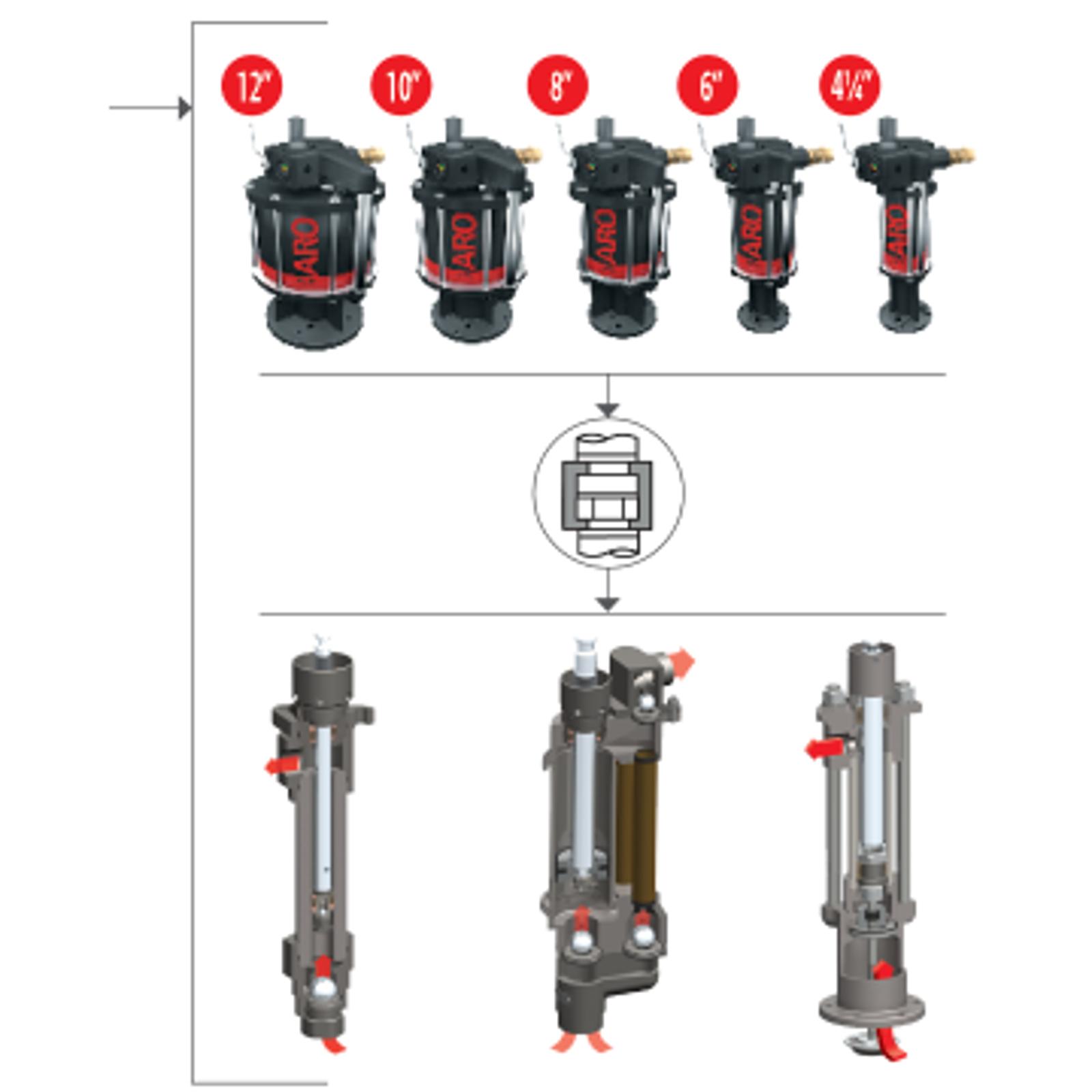
Divorced Pump

Motor and lower end can be combined in different ways. 

This gives two main advantages: 

- Flexibility, same lower end can fit different motors and vice versa 

- Ease of maintenance, the two parts can be serviced separately:

Divorced piston pump explanation 2
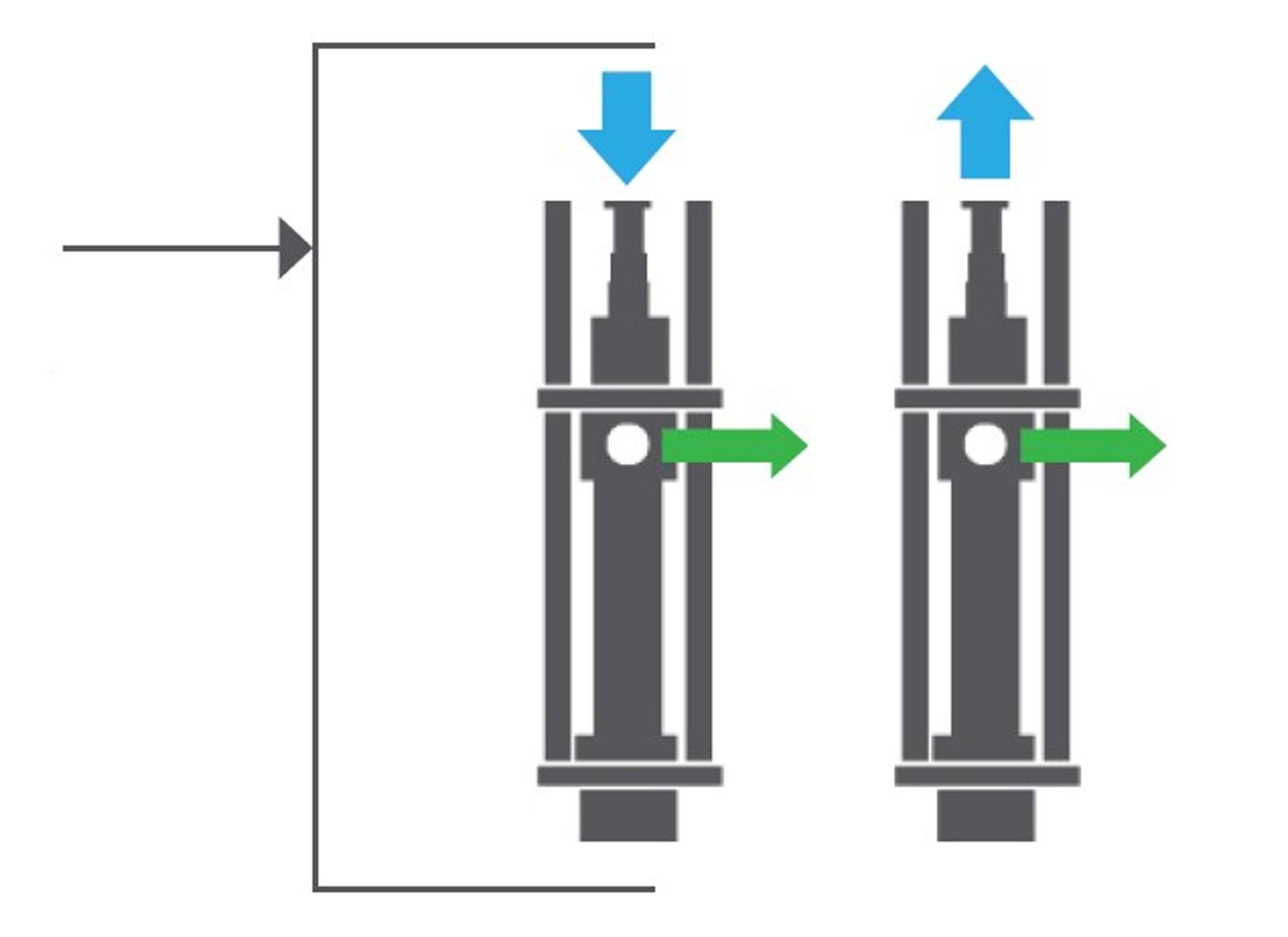
  • Double Effect

    Pump is delivering product both in downstroke end in upstroke.

piston-pump-double-effect-explanation.jpg
  • Pressure Ratio
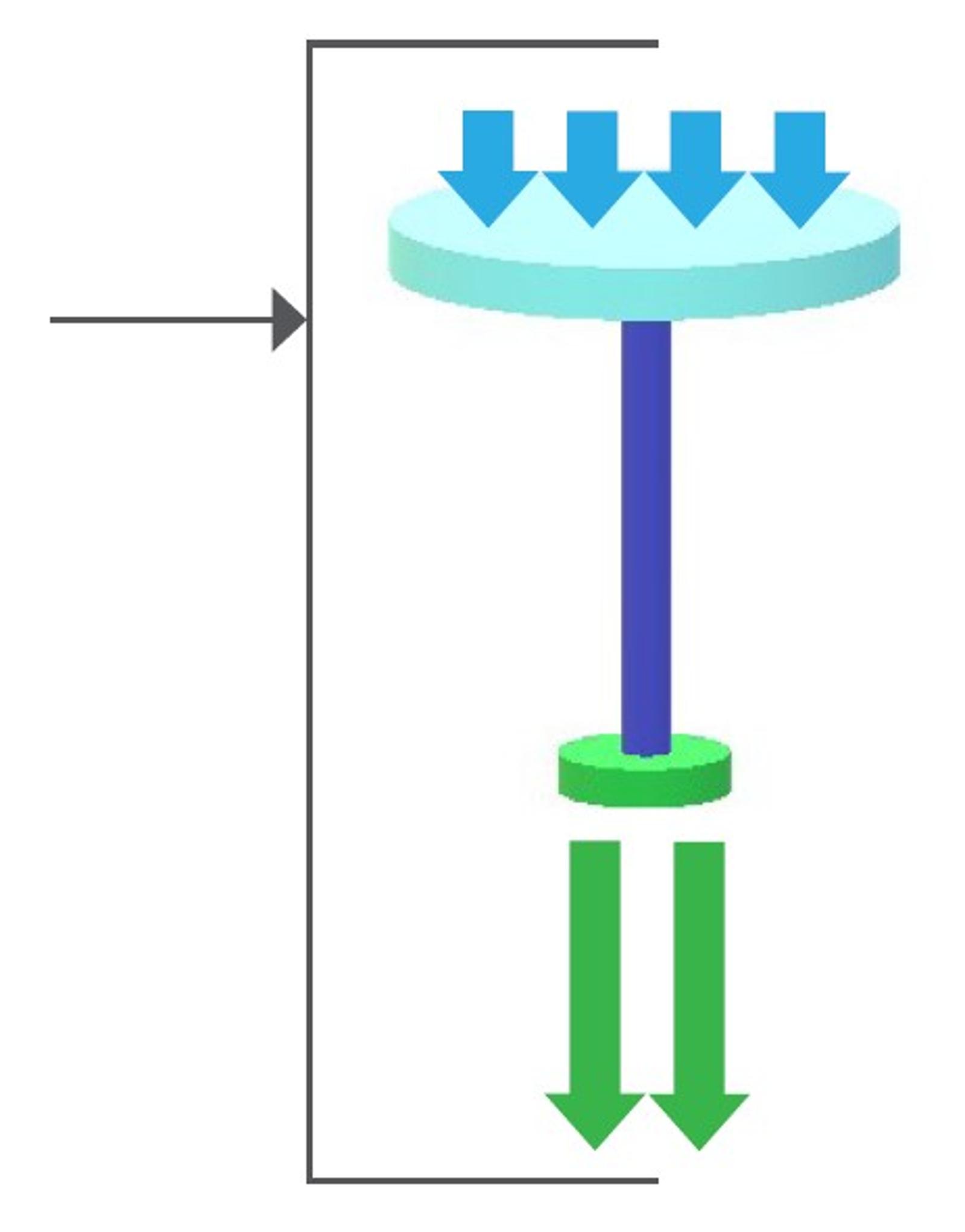
    Different combinations of air motor and lower cylinder sizes create a geometrical ratio, therefore a pressure ratio.

4:1 Ratio Example 

Air Motor side 

- Big Surface: 4 

- Air pressure: 2 bar 

Lower End Fluid Side 

- Small Surface: 1 

- Fluid pressure: 8 bar

piston-pump-pressure-ratio-explanation.jpg

Pressure ratio is the effective area difference between the air motor piston and the lower-end plunger rod. A higher ratio means higher fluid output pressure — letting you pump thicker fluids or push fluid over longer distances. At 6.9 bar (100 psi) of inlet air pressure, an 11:1 pump produces 75.8 bar (1,100 psi) of fluid outlet pressure, while a 23:1 pump produces 158.6 bar (2,300 psi). 

What Industries Use Piston Pumps?

Piston pumps are used across a wide range of industries — from sealants and adhesives manufacturing, automotive, and aerospace to printing, electronics, marine, and renewable energy. They handle an equally wide range of fluids: paints, inks, resins, adhesives, grease, sealants, oils, and water. If a fluid needs to move reliably, a piston pump is likely part of the solution. 

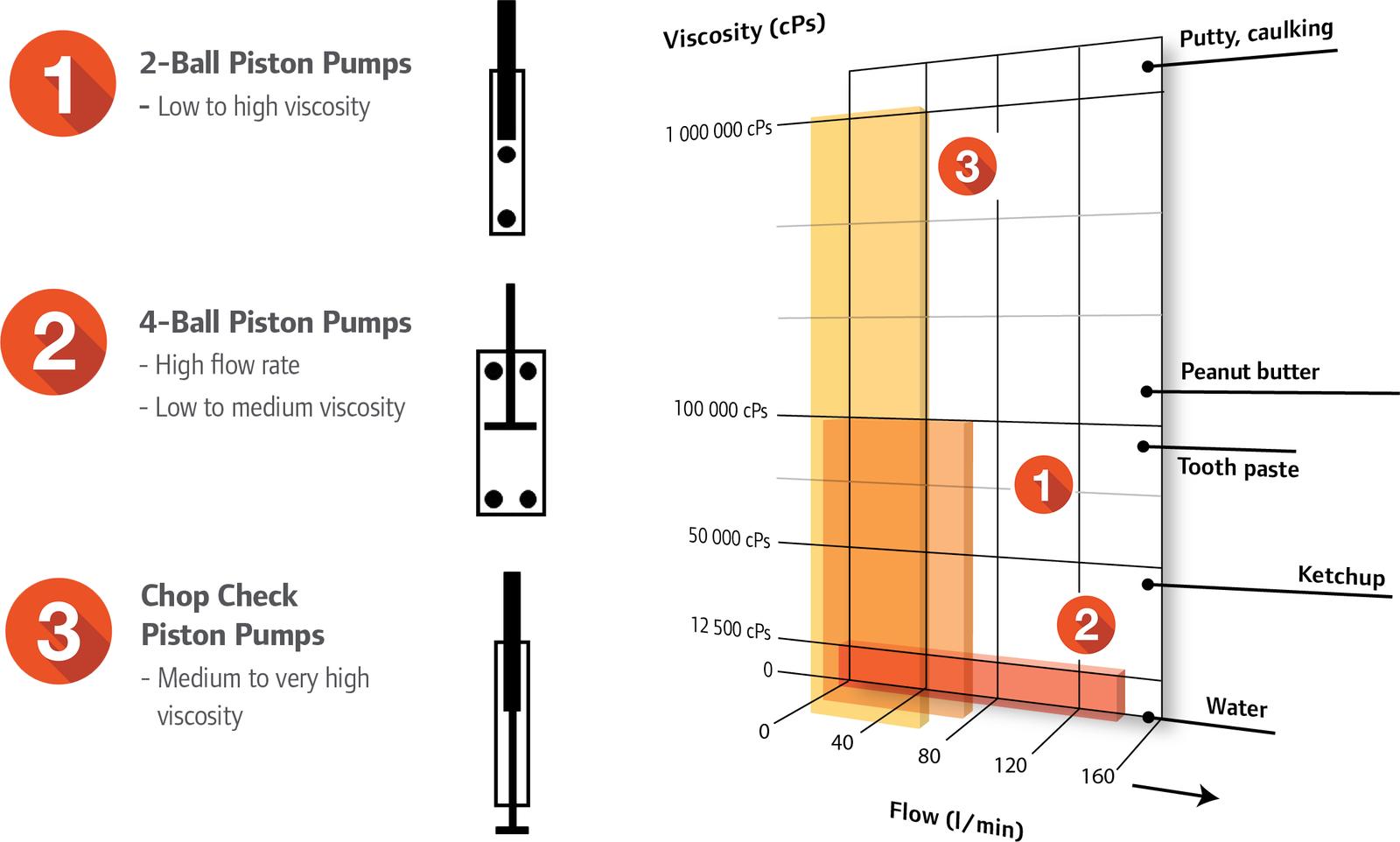
2-Ball vs. 4-Ball vs. Chop-Check: Which Piston Pump Do You Need?

aro-2-ball-vs-4-ball-chop-check.png

2-Ball Piston Pumps

The most versatile option in the range. Best for: spray coating, high-pressure cleaning, liquid inks, lubrication, and transfer at low to very high pressure. 

4-Ball Piston Pumps

Built for high flow. Best for: high-volume transfer of resins, glues, paint, varnishes, enamels, lacquers. 

Chop-Check Piston Pumps

Built for very thick materials — from 15,000 up to 1,000,000 cPs. Best for: mastics, silicone, caulking, adhesives, sealants, heavy inks, grease.  

Find your piston pump in just a few clicks!

Use our Piston Pump Selector Tool to find pumps that match your exact requirements. Optimize performance and reliability by choosing the right pump for your process with ARO! 

Piston Pump Materials: What's Right for Your Fluid?

Choosing the wrong material can lead to corrosion, rapid wear, or contamination. Here's a quick overview of your main options. 

Lower pump end: 

  • Stainless steel — corrosion resistant, ideal for water-borne and corrosive fluids. Can be chrome-plated or ceramic ultra-coated for added abrasion resistance.
  • Carbon steel — excellent abrasion resistance for solvent-borne fluids. Not suited to water-borne or corrosive materials.
  • Ceramic ultra-coating — extends service life up to twice as long. Standard on 4-ball pumps, available on 2-ball.

Packing seals: 

  • UHMW-PE (ultra‑high‑molecular‑weight polyethylene) — all-purpose abrasion resistance. Common with inks, acids, and solvents.
  • PTFE (polytetrafluoroethylene) — compatible with virtually all fluids. Best for corrosive chemicals, ketones, and RTV materials.
  • Leather — often combined with UHMW-PE for superior sealing, especially in ink applications.
  • Staggered packing — combines two materials to maximize service life.

FAQ

The four key selection factors are: the type of fluid, its viscosity or thickness, the required flow rate, and the required output pressure. Getting these right from the start ensures reliable operation and prevents premature wear on your equipment. Use our Piston Pump Selector Tool to find pumps that match your exact requirements.

Piston Pump Selector Tool