
Glycol Cooling Systems for Modern Data Centers
Glycol cooling systems play a critical role in modern data center thermal management. As AI workloads, HPC applications, and rack densities continue to grow, operators need reliable cooling solutions that maintain stable temperatures and support continuous uptime. This guide explains how glycol cooling systems work, compares common glycol types, and explores their role in high-performance data center infrastructures.
Discover How Glycol Cooling Systems Support Reliable Thermal Management
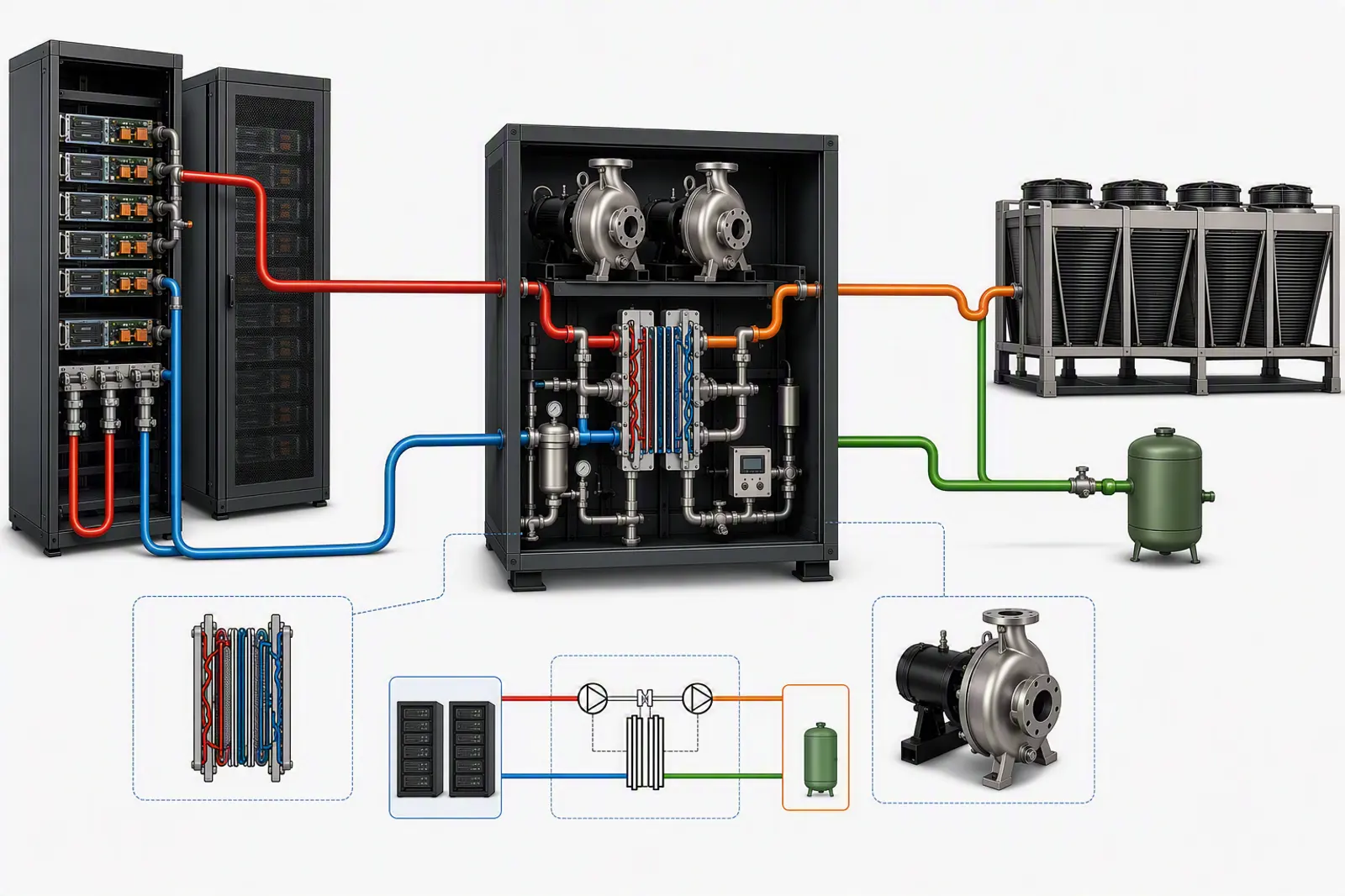
A glycol cooling system is a closed-loop thermal management system used to remove heat from data center equipment. It circulates a water-glycol mixture through cooling infrastructure to maintain stable temperatures and support continuous operation. Unlike a glycol pump, which is only one component, a glycol cooling system includes pumps, piping, heat exchangers, coolant, and control equipment working together. Pumps move water or glycol through critical cooling systems in modern AI and HPC facilities.
Why Do Data Centers Use Glycol Cooling Systems?
Modern data centers generate large heat loads. Higher rack densities and AI workloads continue increasing cooling demand. Reliable thermal management helps protect servers, networking equipment, and uptime. Key reasons operators use glycol cooling systems include:
Ready for Liquid Cooling
Support for liquid cooling infrastructures
Consistent Thermal Stability
Improved thermal stability
Outdoor Environment Protection
Freeze protection for outdoor equipment
Mission-Critical Uptime
Reliable operation in 24/7 facilities
Flexible Infrastructure Compatibility
Compatibility with CDUs and heat exchangers
Optimized AI Cooling
Efficient heat transfer for high-density computing environments
How Does a Glycol Cooling System Actually Work?
Understanding how the system works helps engineers evaluate cooling performance and identify potential risks.
Rising Thermal Loads
Heat Capture Begins
Continuous Coolant Flow
Thermal Energy Transfer
Closed-Loop Efficiency
Propylene Glycol vs Ethylene Glycol: Which Fluid Should You Choose?
One of the most common questions during system design concerns fluid selection.
Criteria | Propylene Glycol | Ethylene Glycol |
Toxicity | Lower | Higher |
Heat Transfer Efficiency | Good | Higher |
Typical Use | Sensitive environments | Industrial cooling |
Cost | Higher | Lower |
Thermal Performance | Good | Excellent |
The right choice depends on facility requirements, operating conditions, and cooling objectives.

FAQ
Glycol helps transfer heat while providing freeze protection. Many facilities use glycol cooling loops because they support stable thermal management and equipment protection.
Reach out to us