
Products
Diaphragm Pumps
Piston Pumps
Drum Pumps
Centrifugal Pumps
Gear Pumps
Condensate Pumps
Lubrication Equipment
Filter Regulator Lubricators
Pneumatic Valves & Cylinders
Parts & Accessories
Services
Technologies
How Diaphragm Pumps Work
How Do Powder Pumps Work
Electric Diaphragm Pumps: An Overview
Piston Pump Working Principles
How Drum Pumps Work
Support
Diaphragm Pumps Product Selector
Piston Pump Selector Tool
Gear Pump Selector Tool
Document Library
Chemical Compatibility Guide
Blog
AODD Manufacturer Comparison Guide
Knowledge Hub
On-Demand Webinars
ARO Product Park
Industries
General Manufacturing
Chemical Transfer
Lubrication
Energy
Mining
Data Centers
Food & Beverage
Other Industries
About Us
News
Blog
Become a Distributor

An air operated double diaphragm pump, commonly called an AODD pump, is a type of positive displacement pump powered by compressed air. It uses two flexible diaphragms connected by a common shaft to create alternating suction and discharge strokes.

This simple pumping principle allows an AODD pump to transfer thin liquids, viscous fluids, abrasive slurries, suspended solids and many aggressive chemicals. With the correct pump body, diaphragm and sealing materials, air operated diaphragm pumps can support demanding fluid-transfer applications across a wide range of industries.

Use this guide to understand how an air operated double diaphragm pump works, where it is used, its primary advantages, and what to consider when selecting, installing and maintaining one.

What are air operated diaphragm pumps?

An air operated double diaphragm pump is a pneumatic pump that uses compressed air to move two diaphragms back and forth. An air distribution valve alternates the compressed air between the two air chambers, causing one diaphragm to perform a discharge stroke while the other performs a suction stroke.

Because the diaphragms are connected by a common shaft, their movement is synchronized. As one fluid chamber empties, the opposite chamber fills. Check valves help control the direction of the liquid so that it enters through the suction manifold and exits through the discharge manifold. The alternating movement produces a continuous, pulsating flow as long as compressed air is supplied to the pump. ARO air operated diaphragm pumps are available with different fluid-section and diaphragm materials, helping users match the pump to the fluid’s chemical properties, viscosity, temperature, solids content and application requirements.
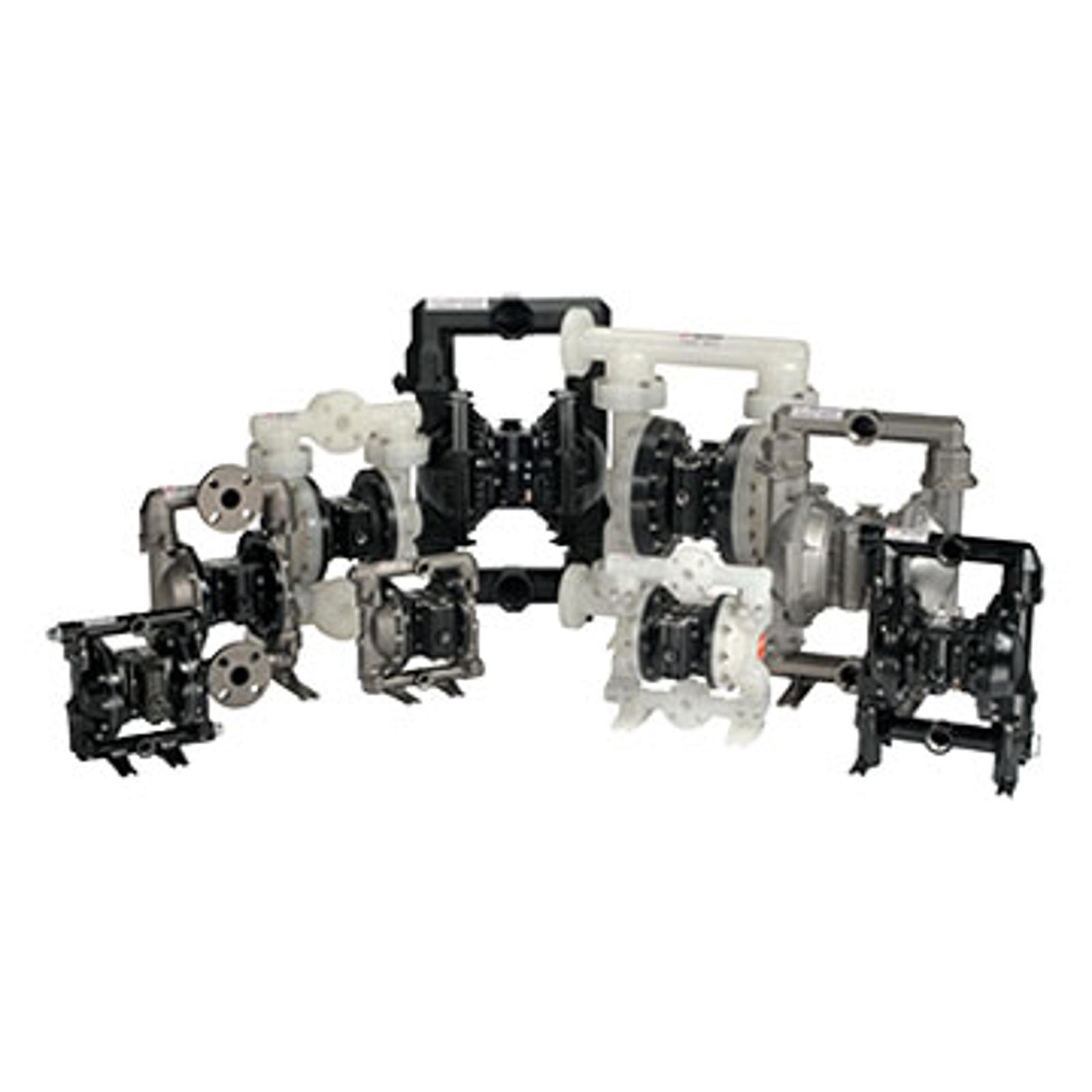
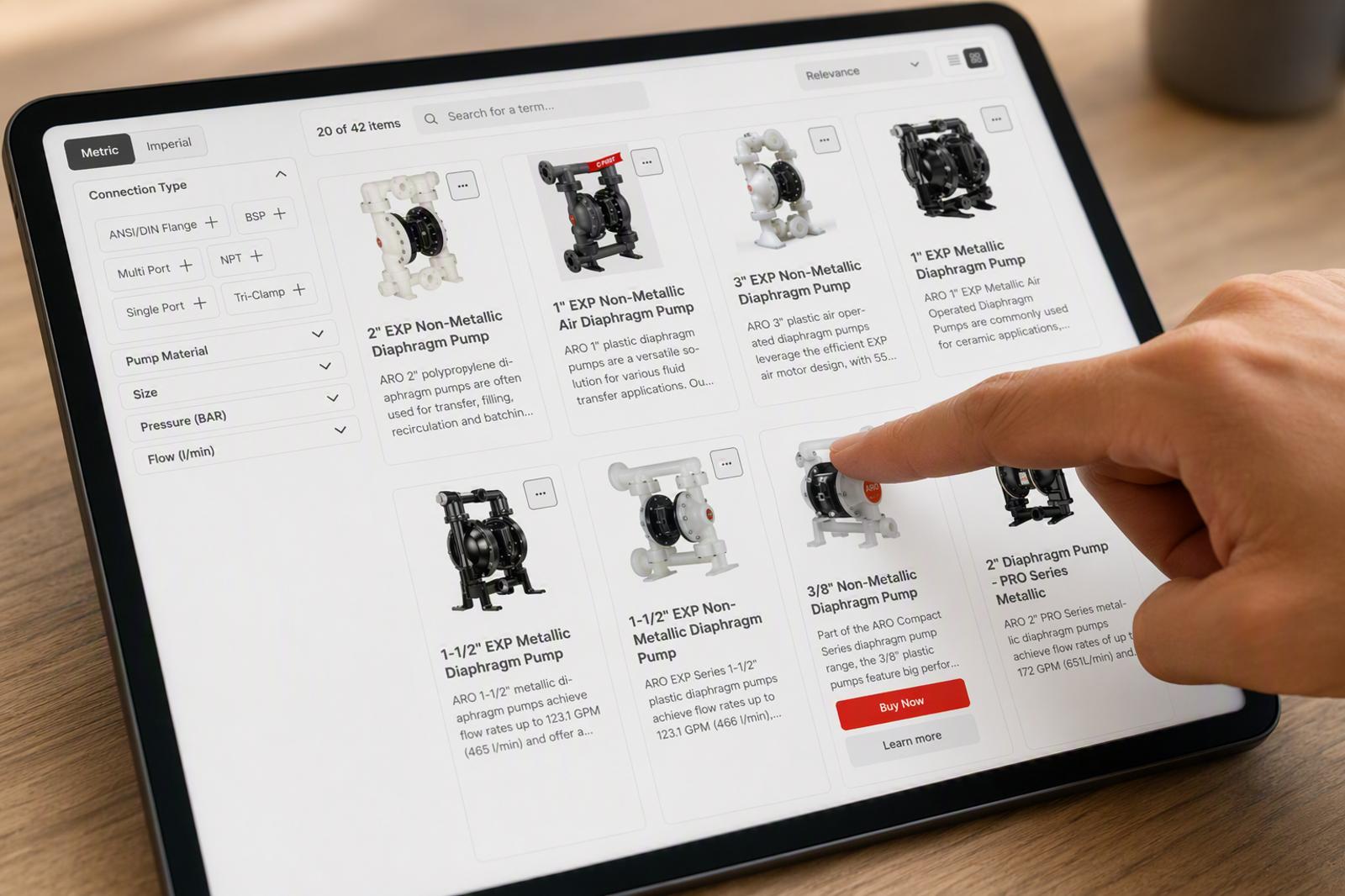
ARO EXP Series diaphragm pumps

What are the advantages of air operated diaphragm pumps?

Pneumatic diaphragm pumps offer a number of advantages, namely:

  • They allow for less wear to the diaphragm compared to a mechanically driven pump, due to the balance of pressure by the compressed air. This means that AODD pumps can run for longer periods of time without damage and have a longer lifespan as well.
  • Their design allows full separation of fluids and sensitive part components, which reduces the frequency of repairs.
  • They can handle abrasive and viscous sludges, slurries or fluids.
  • Also, the smooth pumping mechanism of the pump means that they are well-suited for shear-sensitive fluid applications.
  • As the only stationary seals in AODD pumps are between the wetted components and the exterior of the device, leakage can only occur if one or both of the diaphragms fail.
  • Because their working mechanisms don’t produce a spark, AODD pumps are suitable for use in hazardous areas, such as where flammable materials are present.
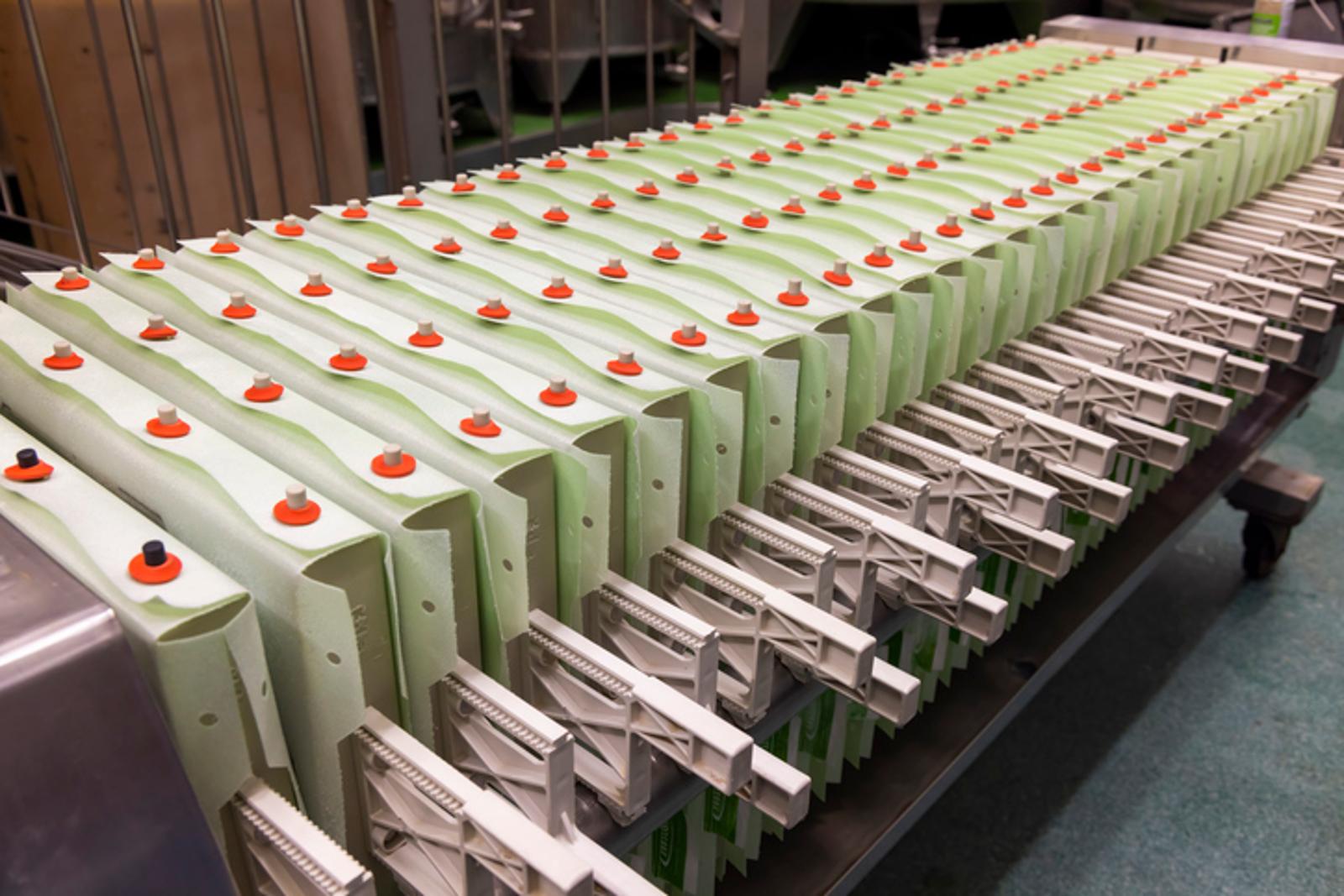
ARO air diaphragm pump in use for a national leader in the recycling of silver-bearing x-ray film

How do air operated diaphragm pumps work?

Air operated diaphragm pumps (AODD) utilize dual flexible diaphragms mounted to a shared shaft which moves back and forth repeatedly in strokes to pump fluids into and out of the pump’s fluid chamber. This movement creates a vacuum, which intakes fluid through an inlet port.

When the diaphragms are subsequently pushed in the opposite direction back to their original positions via compressed air, the fluid is expelled from the product chamber via an outlet port. This cycle repeats while the AODD is in operation, which creates the pumping action this device is known for.

How Pneumatic Diaphragm Pumps Work: AODD Pump Basics Explained

To load this content, approve your cookie preferences and allow the required cookies.

In Figure 1, the left diaphragm has been forced towards the fluid chamber, and in doing so has displaced the liquid through the open valve at the top of the discharge port. At the same time liquid is drawn into the right-hand chamber via the right diaphragm. At the end of the stroke, the positions are reversed and the cycle repeats in the opposite direction, as shown in Figure 2.

Figure 1: Diaphragms which moves to the left

how does AODD work left diaphragm push

Figure 2: Diaphragms which moves to the right

how does AODD work right diaphragm push

How to use an air operated diaphragm pump

AODD pumps come with a range of benefits and can have somewhat specialized requirements for their installation. Adhering to these instructions can help avoid a variety of costs and damages to your AODD pump:

  • They must be mounted on a rigid base or surface, as the mechanism of this pump’s diaphragms cause it to vibrate during operation. Suction and discharge connections should be flexible connections (such as a rubber hose), not ridged pipe, and should be compatible with the fluids being pumped.
  • The fluid inlet suction pipe or hose should be at least the same size as the suction port. If this is not adhered to, pump starvation can occur. It also should be as short and as close to the supply vessel as possible.
  • Ensuring a properly sized air supply line is crucial. Using an airline that is too small can lead to starvation of compressed air. Proper air flow is required for the AODD pump to operate effectively.
  • To regulate the flow and pressure of AODD pumps, an air pressure regulator assembly should be installed in the pump’s air supply line to regulate incoming air pressure.
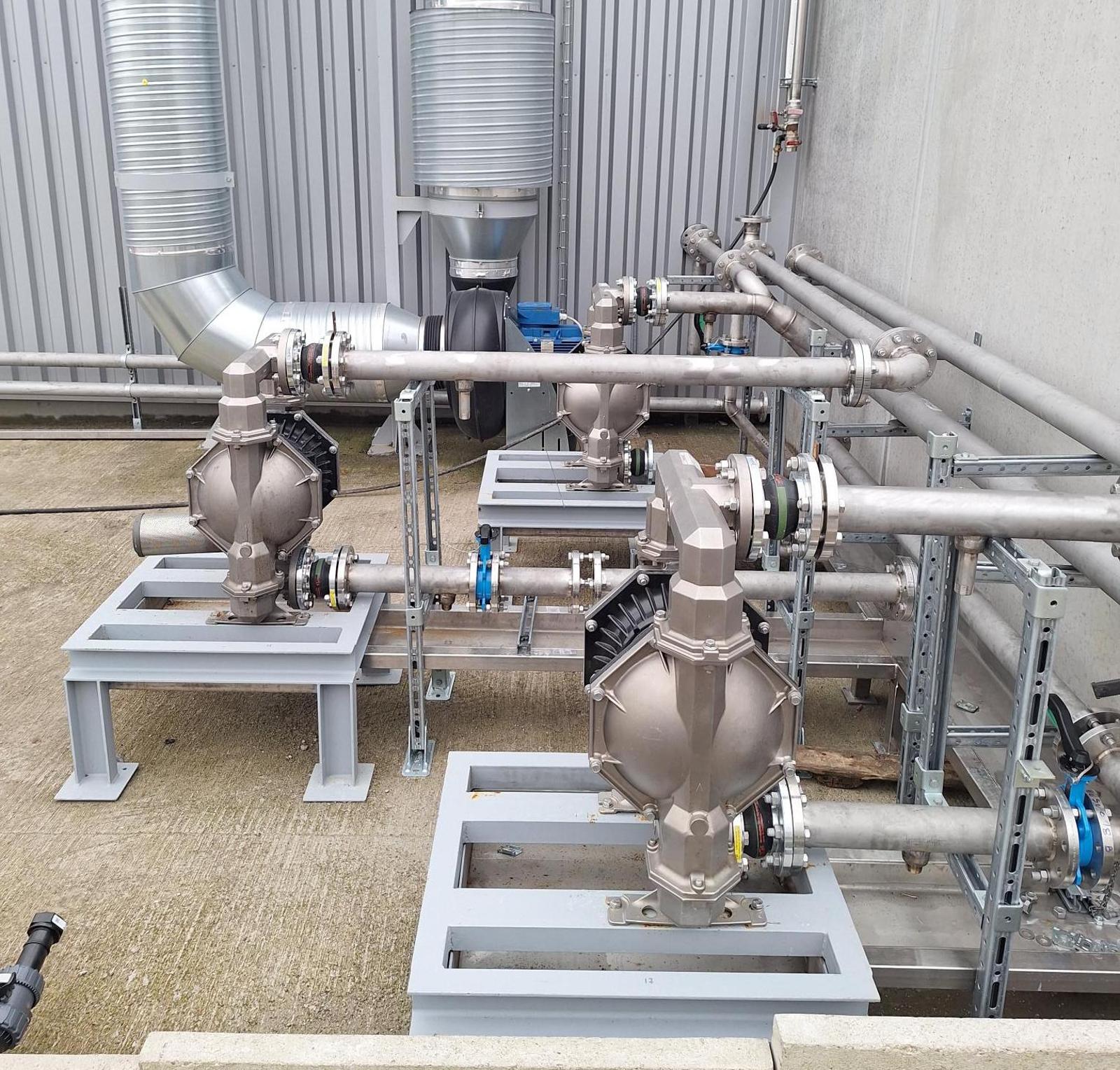
3'' pneumatic diaphragm pumps installed in a chemical application

How to repair an air operated diaphragm pump

In the event of failure of your AODD pump, you should check the following:

  1. Ensure that the air inlet size isn’t too small.
  2. Inspect the pump’s muffler for icing. AODD pumps are loud when in operation, so mufflers are often used. As a result of air compression of the device, the overall temperature of the muffler can sometimes be lowered to below freezing. In particularly humid environments, this can lead to ice buildup. (Note: Icing particularly occurs with competitor pumps. ARO EXP Series diaphragm pumps are expertly engineered to provide ice-free operation, thanks to our patented quick-dump valves that release icy air into the atmosphere, thus preventing freezing from occurring.)
  3. Check the pump’s inlet and outlet lines for any blockages, including sealed or partially sealed valves.
  4. Regularly inspect the AODD pump for leakage. As part of routine pump maintenance, replace any PTFE O-rings as they are prone to leakage.

ARO® PD05P-X-X-B Maintenance and Repair

To load this content, approve your cookie preferences and allow the required cookies.