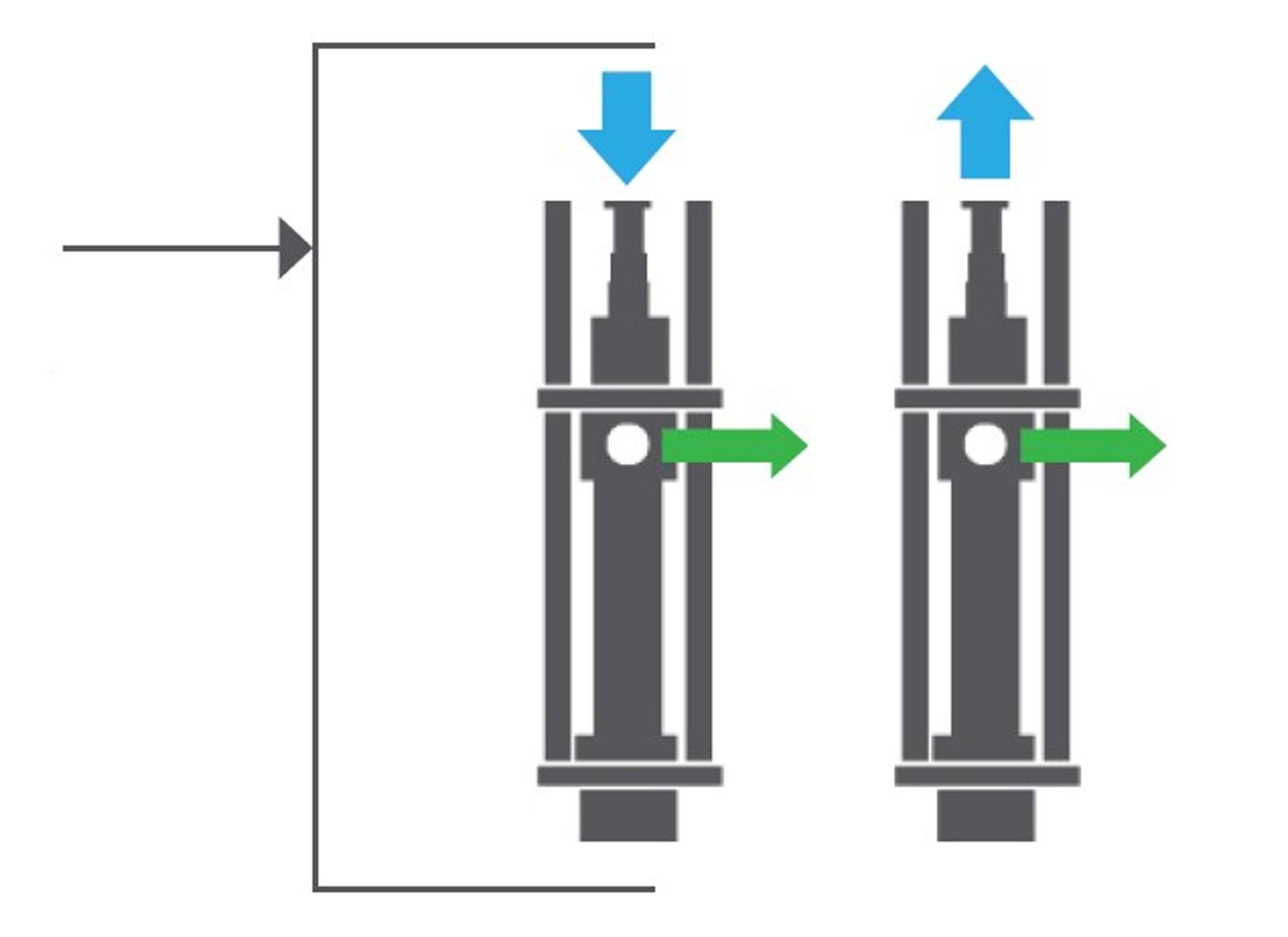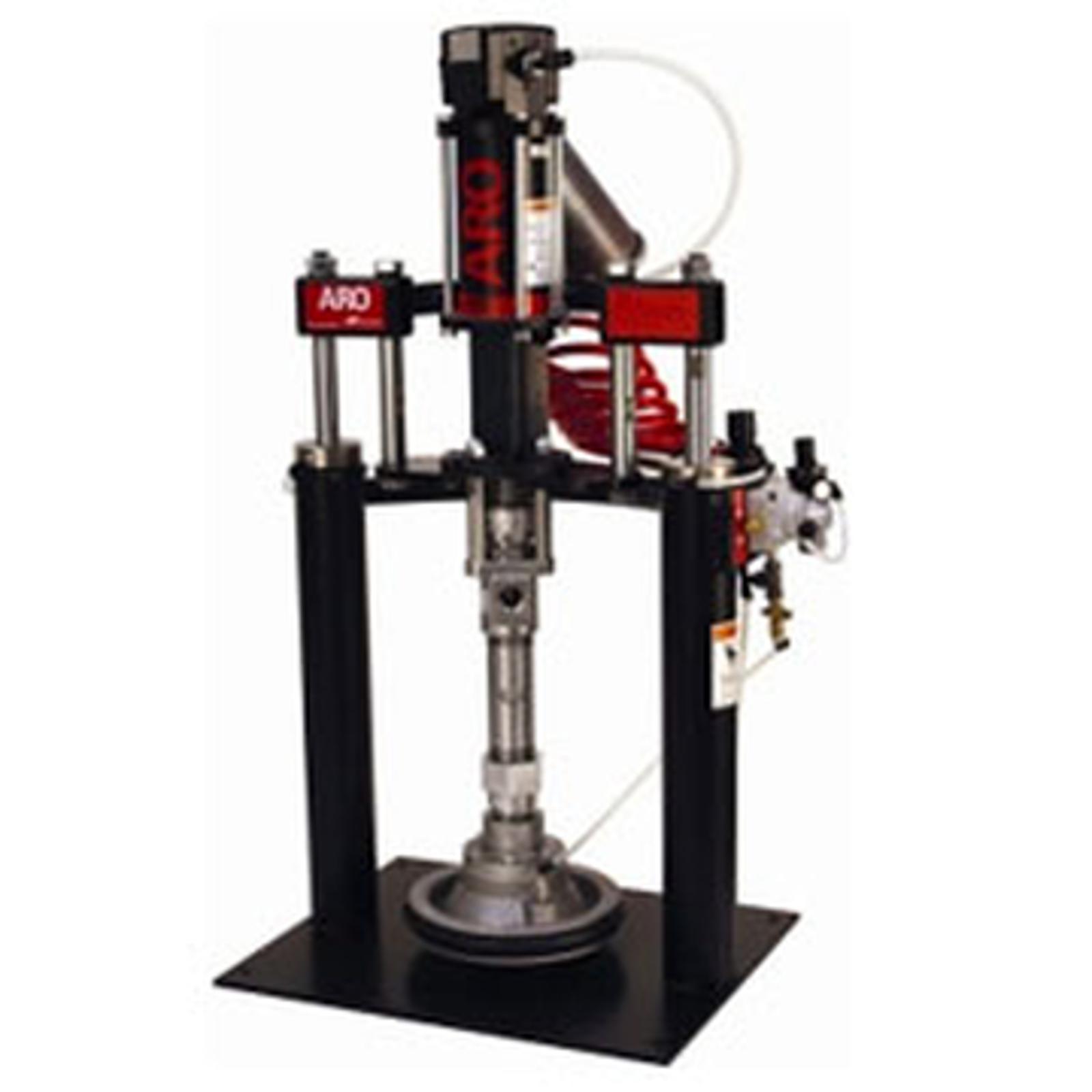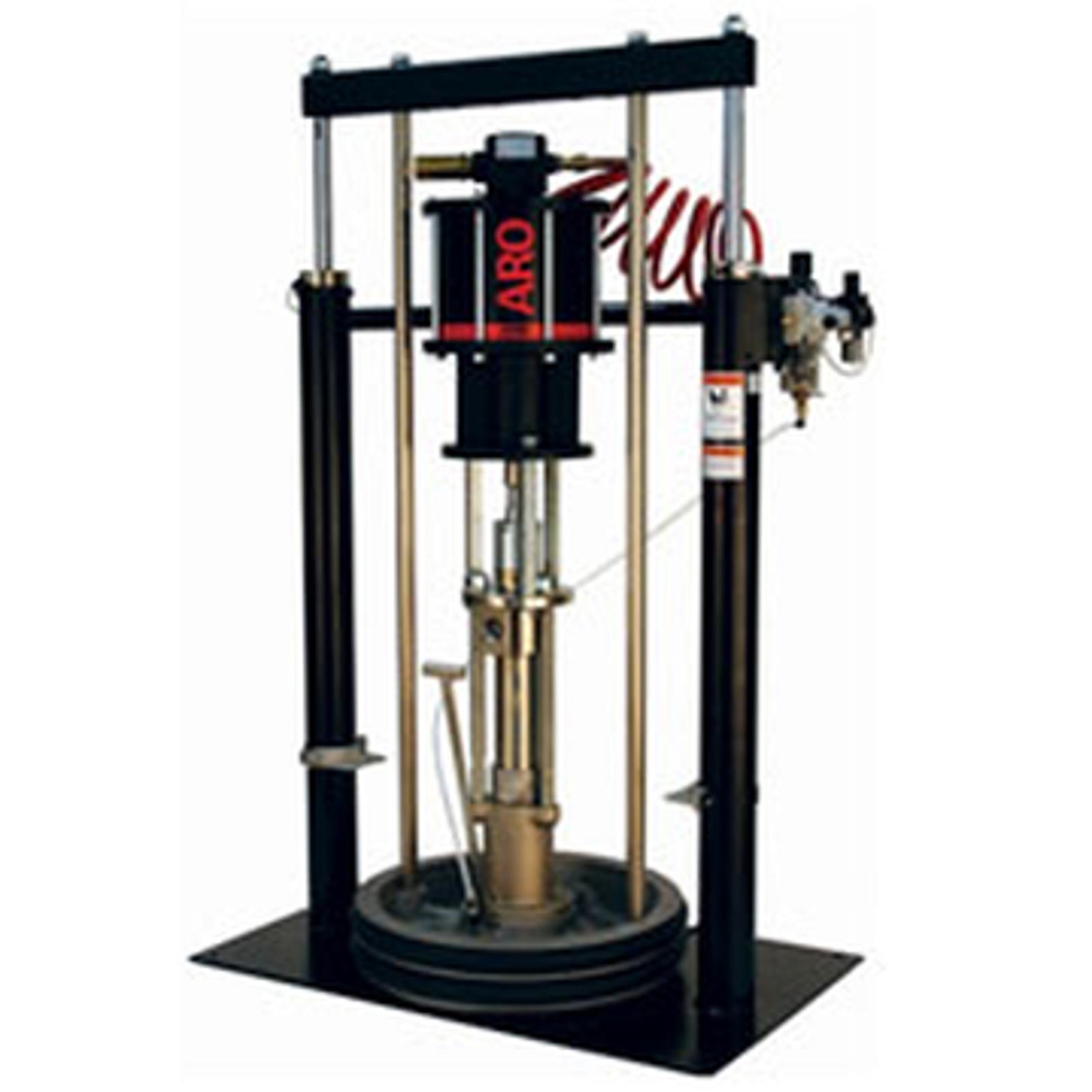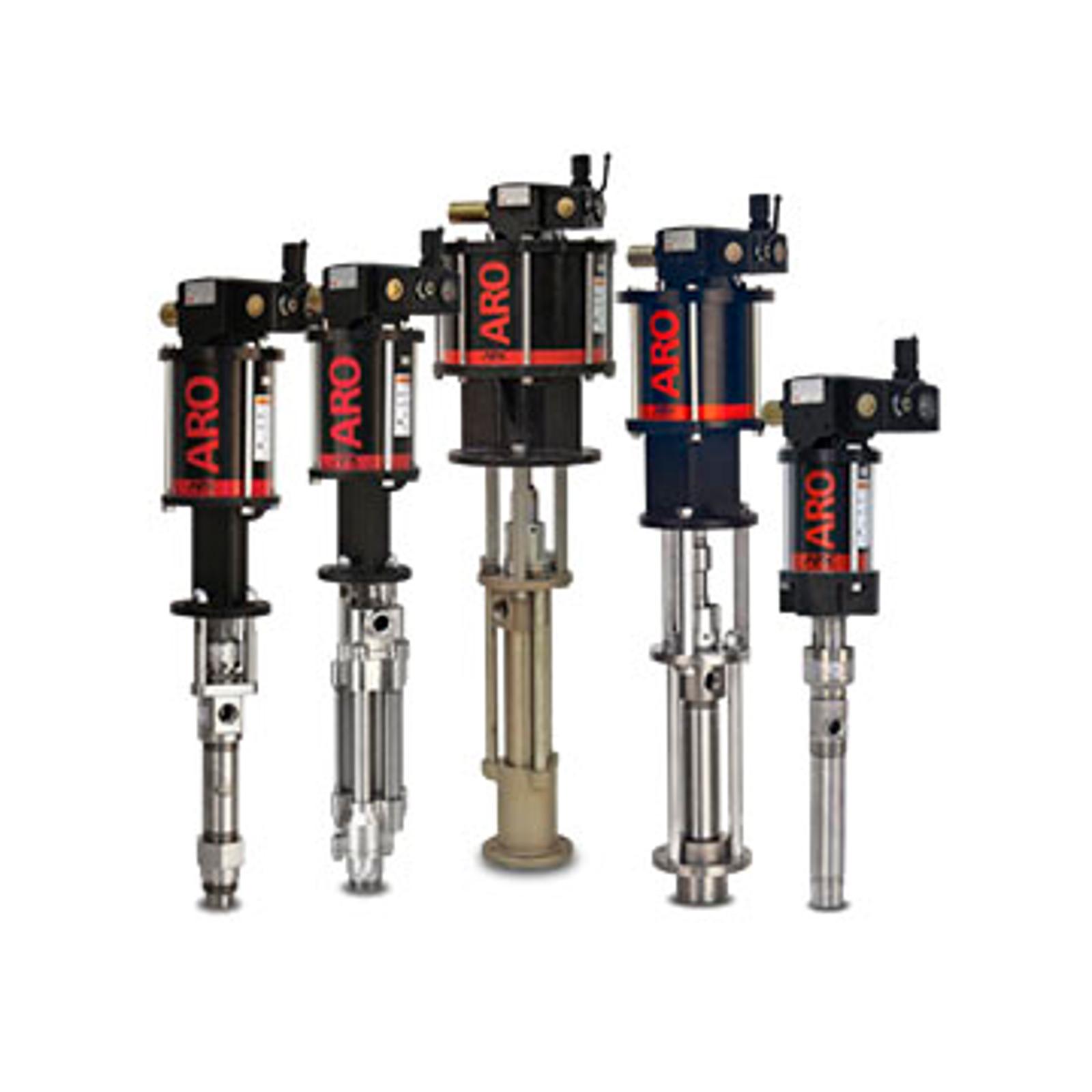

Divorced Pump
Motor and lower end can be combined in different ways.
This gives two main advantages:
- Flexibility, same lower end can fit different motors and vice versa
- Ease of maintenance, the two parts can be serviced separately:

Air-operated piston pumps are one of the most versatile tools in industrial fluid handling. Whether you're transferring paint, dispensing adhesives, or extruding thick grease, a piston pump can handle the job reliably. This guide covers how they work, which type fits your application, and what to look for when selecting materials and pressure ratios.
To load this content, approve your cookie preferences and allow the required cookies.
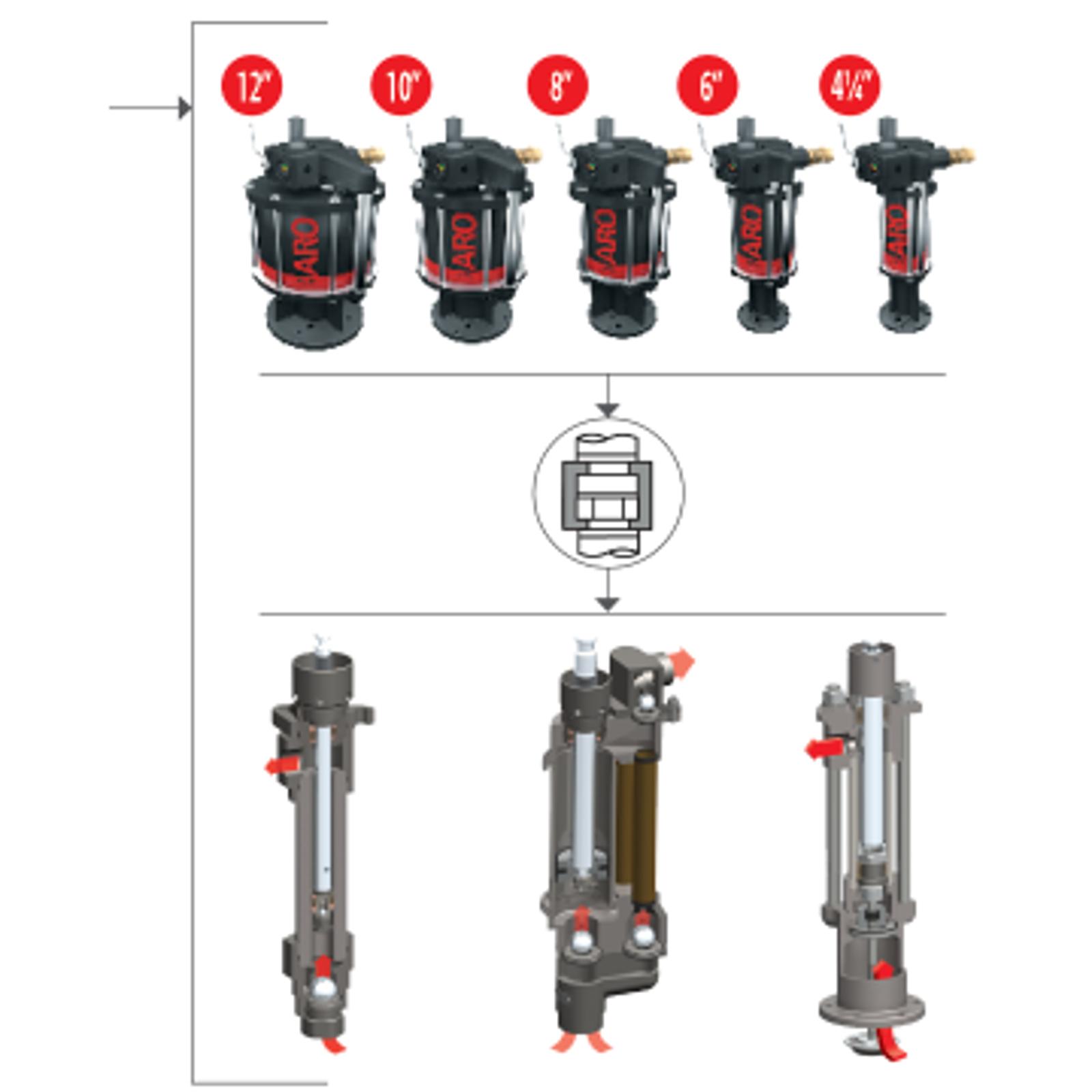
Motor and lower end can be combined in different ways.
This gives two main advantages:
- Flexibility, same lower end can fit different motors and vice versa
- Ease of maintenance, the two parts can be serviced separately:

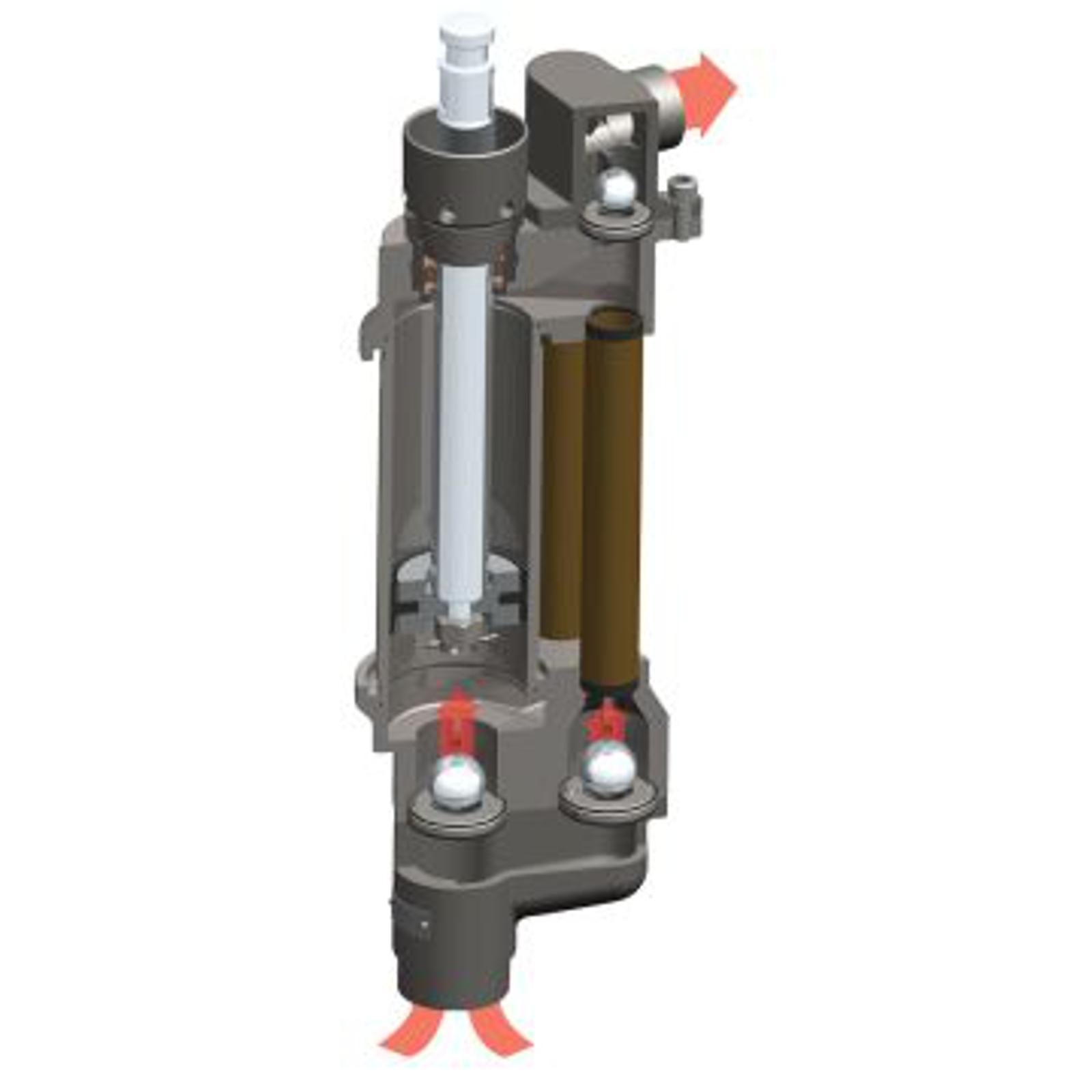
Pump is delivering product both in downstroke end in upstroke.

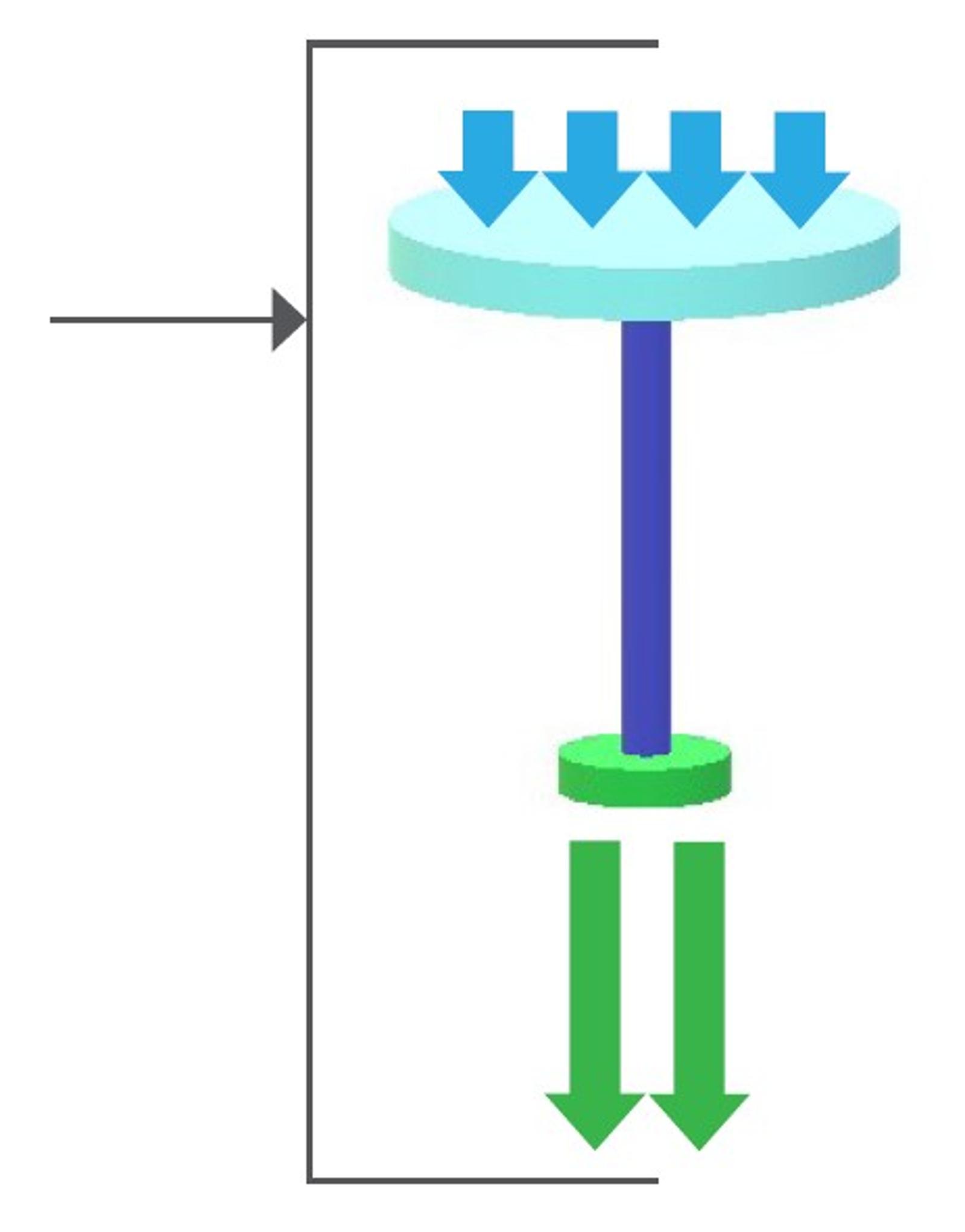
4:1 Ratio Example
Air Motor side
- Big Surface: 4
- Air pressure: 2 bar
Lower End Fluid Side
- Small Surface: 1
- Fluid pressure: 8 bar

Pressure ratio is the effective area difference between the air motor piston and the lower-end plunger rod. A higher ratio means higher fluid output pressure — letting you pump thicker fluids or push fluid over longer distances. At 6.9 bar (100 psi) of inlet air pressure, an 11:1 pump produces 75.8 bar (1,100 psi) of fluid outlet pressure, while a 23:1 pump produces 158.6 bar (2,300 psi).
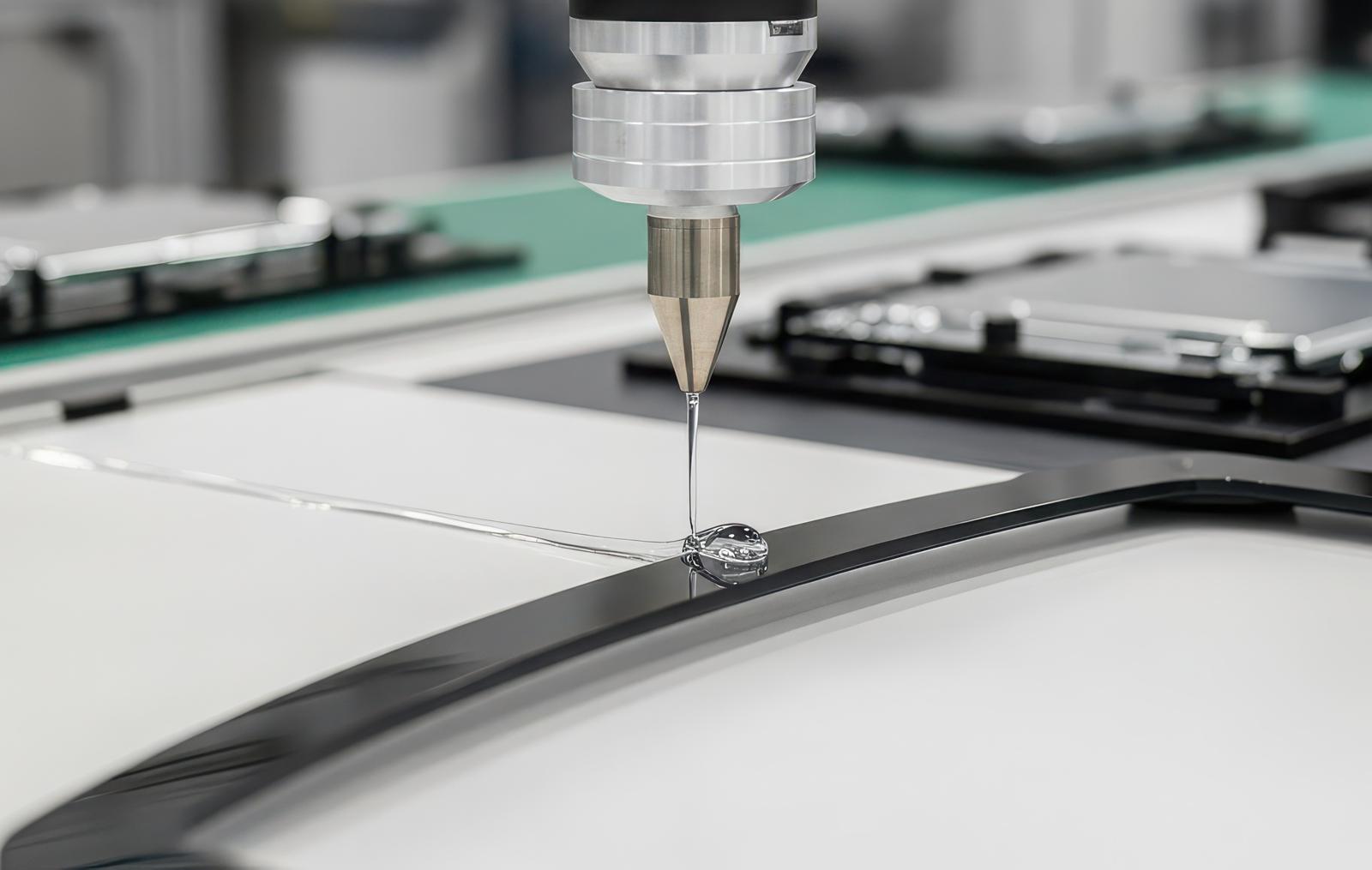
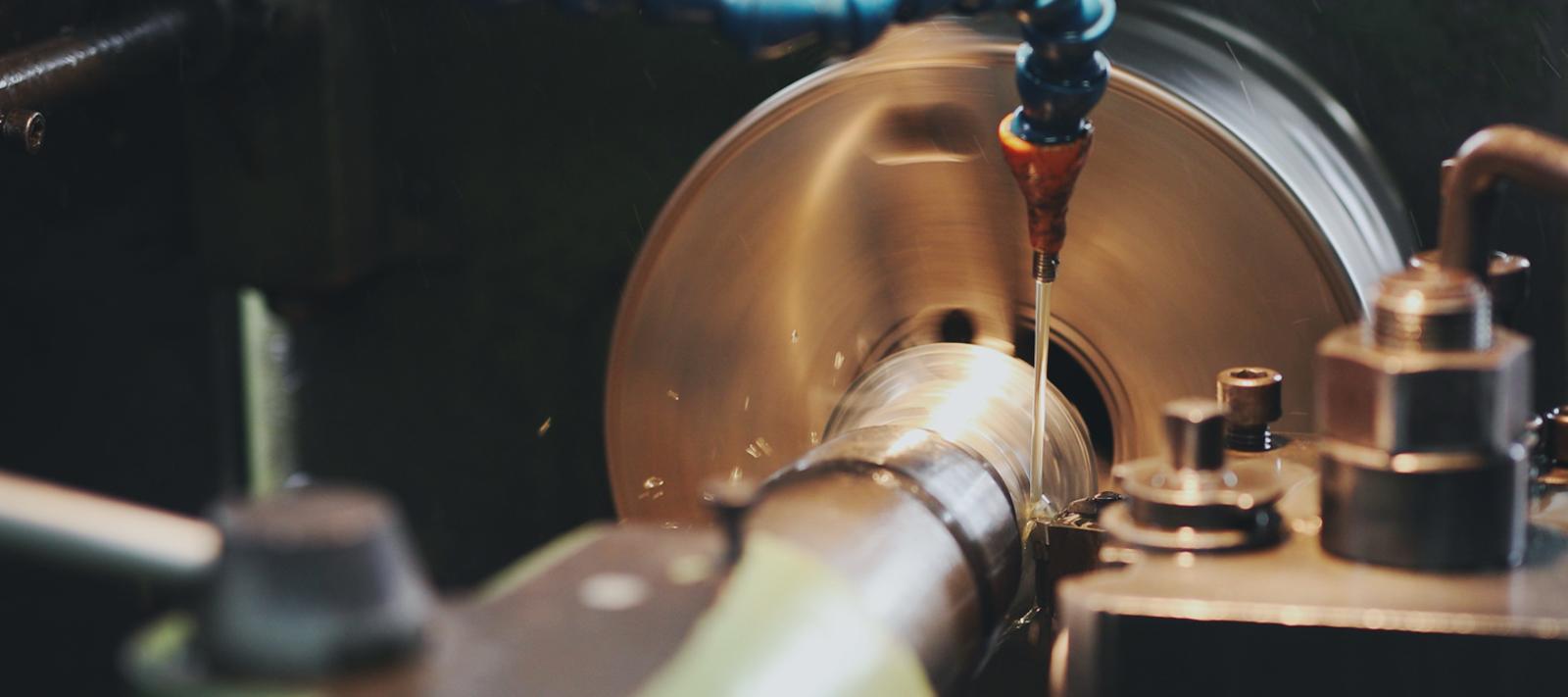
Piston pumps are used across a wide range of industries — from sealants and adhesives manufacturing, automotive, and aerospace to printing, electronics, marine, and renewable energy. They handle an equally wide range of fluids: paints, inks, resins, adhesives, grease, sealants, oils, and water. If a fluid needs to move reliably, a piston pump is likely part of the solution.


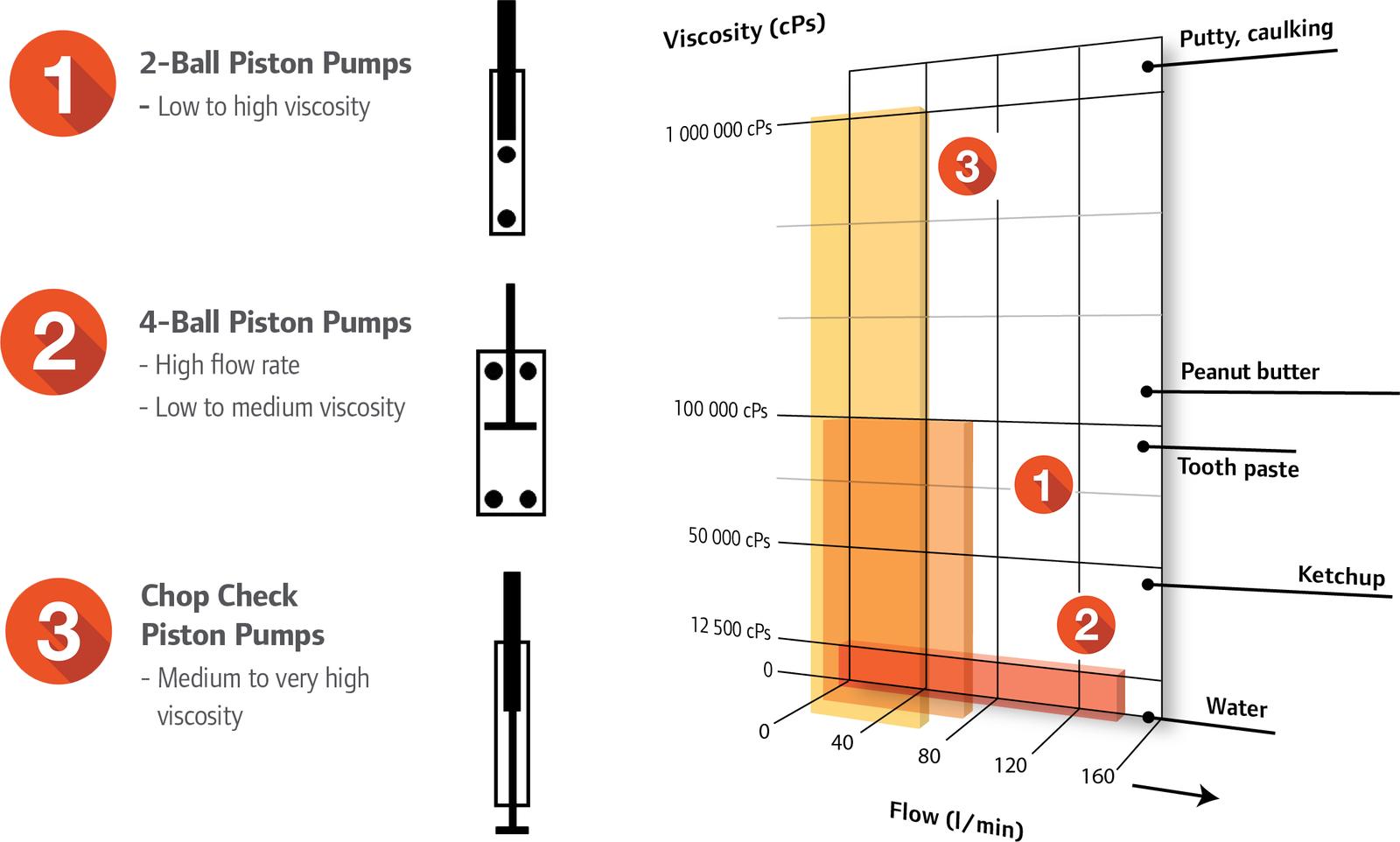
The most versatile option in the range. Best for: spray coating, high-pressure cleaning, liquid inks, lubrication, and transfer at low to very high pressure.

Built for high flow. Best for: high-volume transfer of resins, glues, paint, varnishes, enamels, lacquers.

Built for very thick materials — from 15,000 up to 1,000,000 cPs. Best for: mastics, silicone, caulking, adhesives, sealants, heavy inks, grease.
Choosing the wrong material can lead to corrosion, rapid wear, or contamination. Here's a quick overview of your main options.
Lower pump end:
Packing seals:
The four key selection factors are: the type of fluid, its viscosity or thickness, the required flow rate, and the required output pressure. Getting these right from the start ensures reliable operation and prevents premature wear on your equipment. Use our Piston Pump Selector Tool to find pumps that match your exact requirements.
.jpeg?format=pjpeg&width=1600&quality=75&auto=webp)