
How Piston Pumps Handle Automotive Adhesives
Walk into any automotive assembly plant, and you'll see robots applying precise beads through adhesive dispensing systems to body panels, operators carefully sealing windshields, and automated systems dispensing sealant along door frames. These operations look routine—until you consider what's actually happening at the molecular level.
A single millimeter of variation in bead height can mean the difference between a watertight seal and a warranty claim down the road. An air bubble in a structural adhesive application might pass initial quality checks but lead to bond failure over time. In modern automotive manufacturing, where mixed materials, lighter weight structures, and tighter tolerances are the norm, precision in adhesive and sealant application has moved from "nice to have" to "absolutely critical."

The evolution of automotive adhesive dispensing
Traditional automotive assembly relied heavily on mechanical fasteners and spot welding. Today's vehicles tell a different story. Aluminum body panels bonded to steel frames. Carbon fiber components integrated into production vehicles. Multi-material construction that improves fuel efficiency while maintaining structural integrity.
This shift places new demands on adhesive dispensing equipment for automotive assembly. The materials themselves have evolved—modern automotive adhesives cure faster, bond stronger, and perform across wider temperature ranges than formulations from even a decade ago. Many of these materials exceed viscosities of 500,000 centipoise, creating unique dispensing challenges that high viscosity adhesive pumps must handle consistently.

Understanding the variables in piston pump performance
Temperature plays a bigger role than many realize—a sealant at 18°C (64°F) flows differently than the same material at 24°C (75°F), even with identical pump settings. This becomes critical in facilities where ambient conditions shift between seasons or even between day and night shifts.
Pressure consistency during sealant or adhesive application directly impacts bead geometry. Even small fluctuations create visible differences in bead profile, particularly with materials that change behavior under varying pressure conditions. Material properties themselves can shift during the dispensing process, especially with formulations sensitive to the mechanical action of pumping equipment.
In facilities running both automated and manual operations, equipment reliability becomes paramount. Operators need automotive adhesive dispensing systems that deliver predictable output cycle after cycle, without constant adjustment, intervention, or troubleshooting.
How dispensing inconsistencies impact production lines
Inconsistent dispensing is rarely caused by material alone. More often, it is linked to sealant or adhesive pumps that struggle with:
- High-viscosity or shear-sensitive materials
- Abrasive or filled sealants
- Pressure fluctuations and pulsation
- Clogging, leaking, or excessive maintenance
When flow is unstable, operators compensate by stopping lines, adjusting settings, or applying extra material “just in case.” This leads directly to higher material consumption, slower cycle times, and unpredictable results.
Why precise flow control is essential for automotive adhesives
Automotive adhesives and sealants are engineered for specific bead dimensions and placement. To achieve this consistently, pumps must deliver:
- Stable pressure and smooth flow
- Accurate, repeatable output over long production runs
- Compatibility with robotic and manual application
- Reliable handling of materials with varying viscosities
Precision piston pump is what turns a well-formulated adhesive into a reliable production solution.
Engineering for repeatability
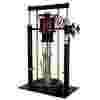
The physics of moving high-viscosity materials consistently requires purpose-built equipment. Piston pumps for adhesives are designed specifically for these challenges, maintaining consistent output pressure, delivering smooth flow, and minimizing internal shear.
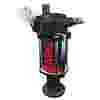
For operations dispensing heavy silicone sealants—materials that can exceed one million centipoise—specialized pump designs like Chop-Check systems represent high viscosity adhesive pumps capable of preventing material starvation and maintaining flow rates up to 46 liters per minute (12.2 gpm). Applications using lower-viscosity materials benefit from 2-Ball piston pump configurations that handle materials up to 100,000 cPs while remaining gentle enough for shear-sensitive formulations.
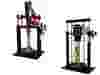
The mechanical simplicity of well-designed automotive piston pumps translates directly to uptime advantages. Fewer wear components mean extended service intervals. Modular design enables quick changeouts when you do need maintenance. And compatibility with both automated dispensing robots and manual application guns gives you flexibility across your facility.
Selecting the right adhesive dispensing equipment
Choosing automotive adhesive dispensing systems isn't about finding any pump—it's about matching pump capabilities to your specific materials, application requirements, and production environment.

ARO has been solving fluid handling challenges since long before adhesive bonding became standard practice. We partner with manufacturers to analyze material properties, understand application requirements, and configure systems that deliver measurable improvements in quality, uptime, and total cost of ownership.
The business impact of consistent adhesive dispensing
When bead quality is consistent, manufacturers see measurable improvements across operations that contribute to a lower total cost of ownership and a more resilient production line:

Reduced material waste through accurate flow control
Fewer production stoppages and less unplanned downtime
Lower maintenance requirements and longer equipment life

Improved first-pass yield and reduced rework
More predictable, repeatable assembly processes
Take the next step: contact our piston pump specialists
Your production schedule doesn't allow for dispensing equipment that can't keep pace. Every shift matters. Every vehicle counts.
Ready to solve your adhesive dispensing challenges? Our technical specialists are standing by to discuss your specific requirements and recommend proven solutions. Whether you're optimizing an existing line or designing new assembly processes, we'll help you select equipment that delivers the consistent performance your operation demands.
Contact ARO's adhesive dispensing experts today.
Frequently asked questions: automotive adhesive piston pumps
Inconsistent bead quality typically stems from pressure fluctuations, material temperature variations, or air entrapment. Pressure fluctuations create irregular bead profiles—even minor variations affect bead height and width. Temperature shifts impact viscosity significantly; a 6°C (11 °F) change can alter flow characteristics by 30-50% in some formulations. Air trapped in material lines causes pressure spikes and flow interruptions. Piston pumps address these issues through consistent stroke delivery, maintaining stable output pressure throughout the dispense cycle, and minimizing pulsation that creates visible defects in high-speed robotic applications.
Reach out to us
Useful resources

.png?format=pjpeg&width=100&quality=10)


Related Solutions

Adhesives & Sealants
When you need a quality seal or precise, consistent adhesive dispensing system, count on ARO for your application.
Piston Pumps and Packages For Transfer & Extrusion
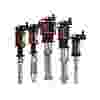
ARO offers hydraulic piston pumps and pneumatic piston pumps for a variety of applications. Find the right piston pump solution for a range of viscous fluids.
Chop-Check Piston Pumps
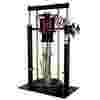
Chop-Check pumps are designed to move medium-to-high viscosity fluids in difficult applications.
2-Ball Piston Pumps
2-Ball piston pumps are designed for uniform, consistent fluid delivery. They handle a variety of applications, from simple transfer of fluids to the extrusion of low- to medium-viscosity materials.
Reach out to us